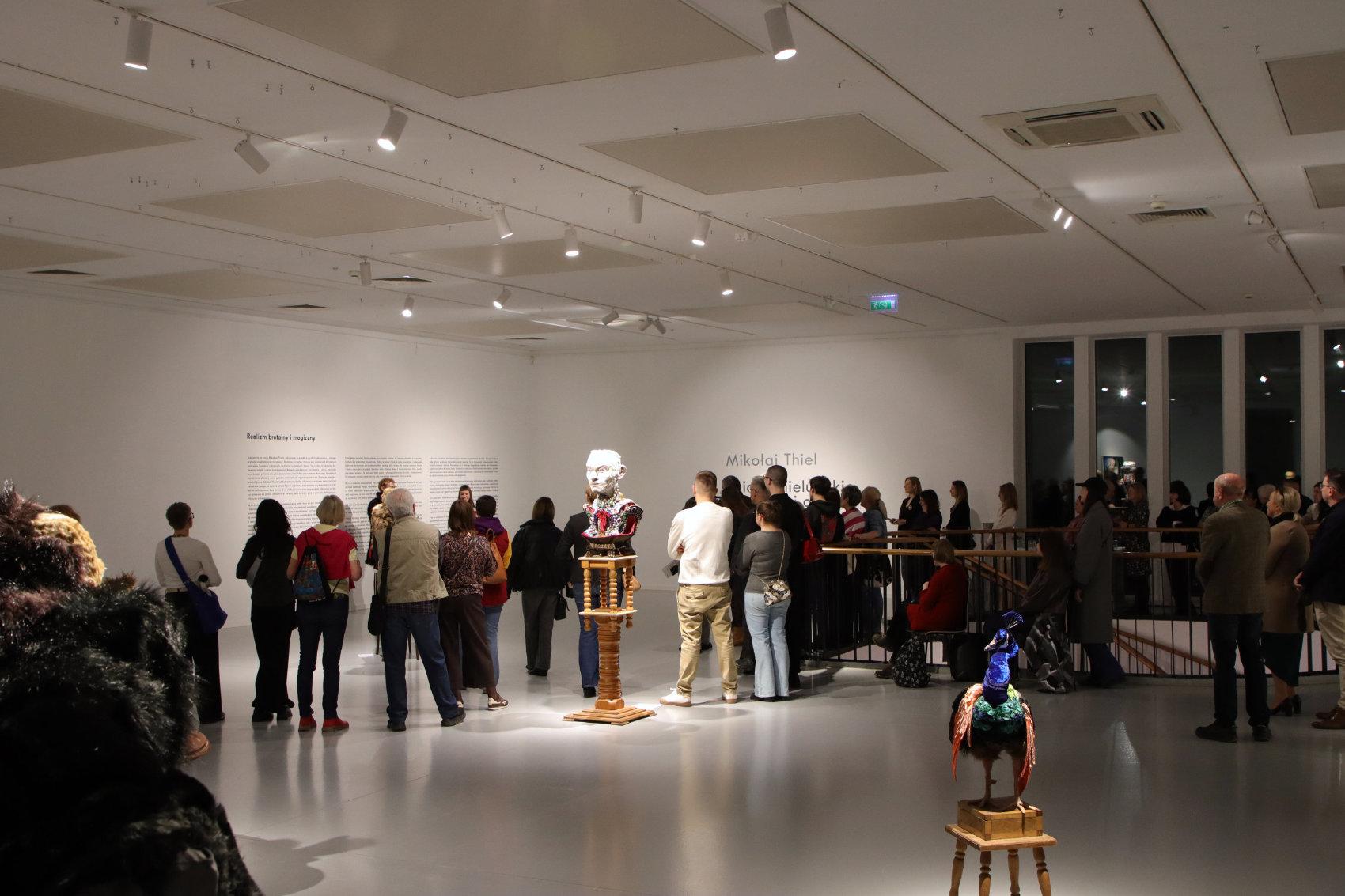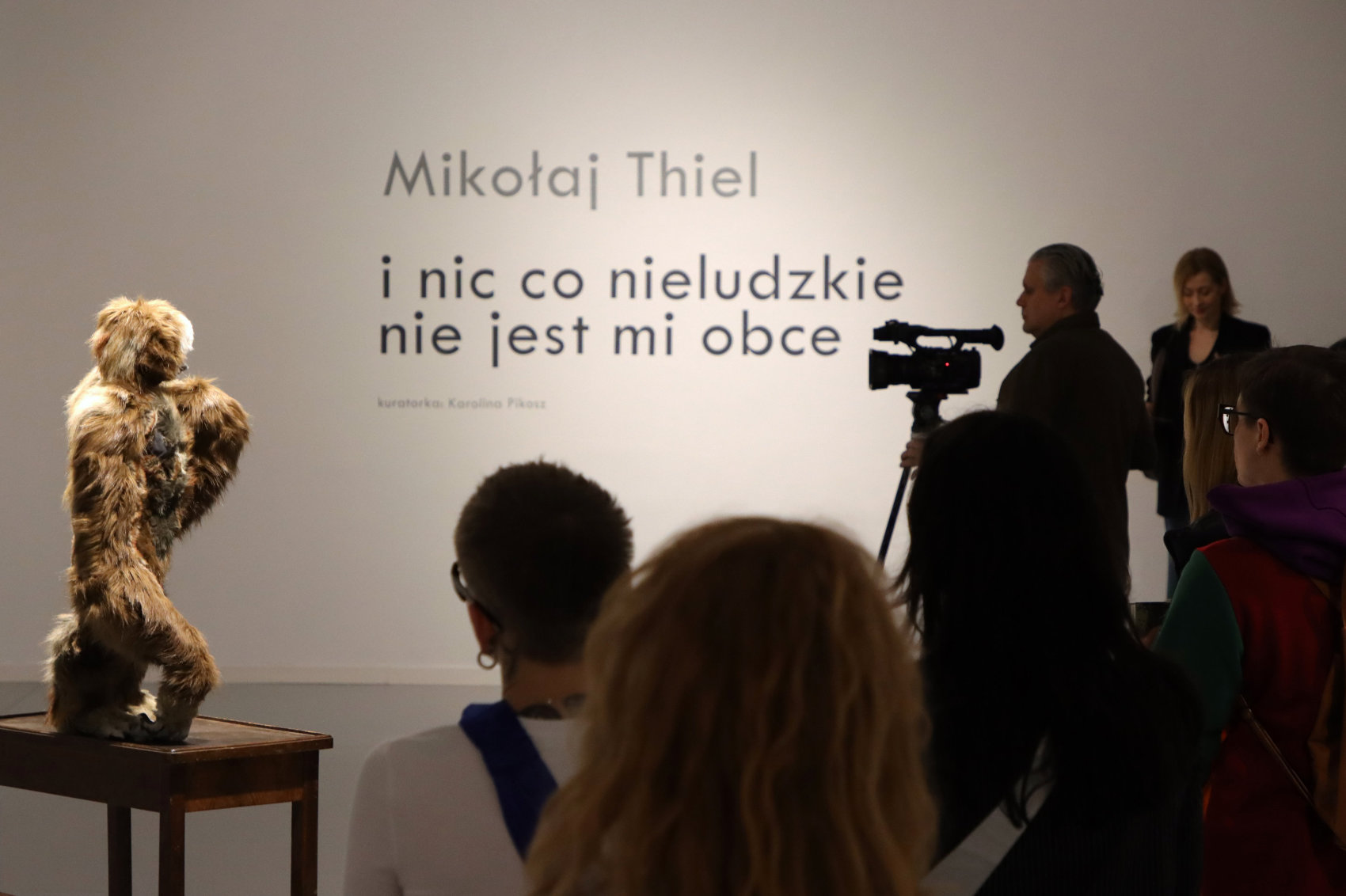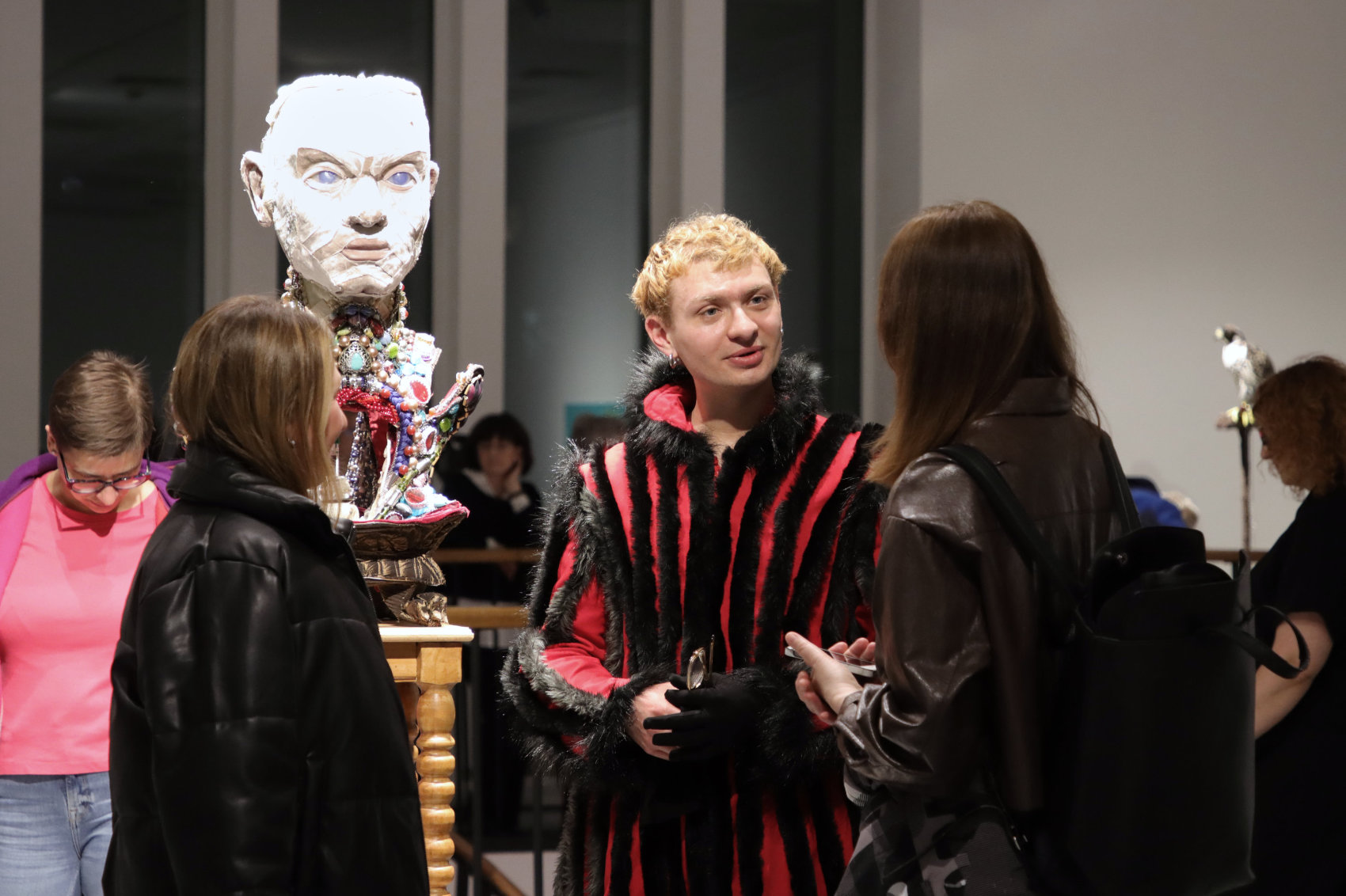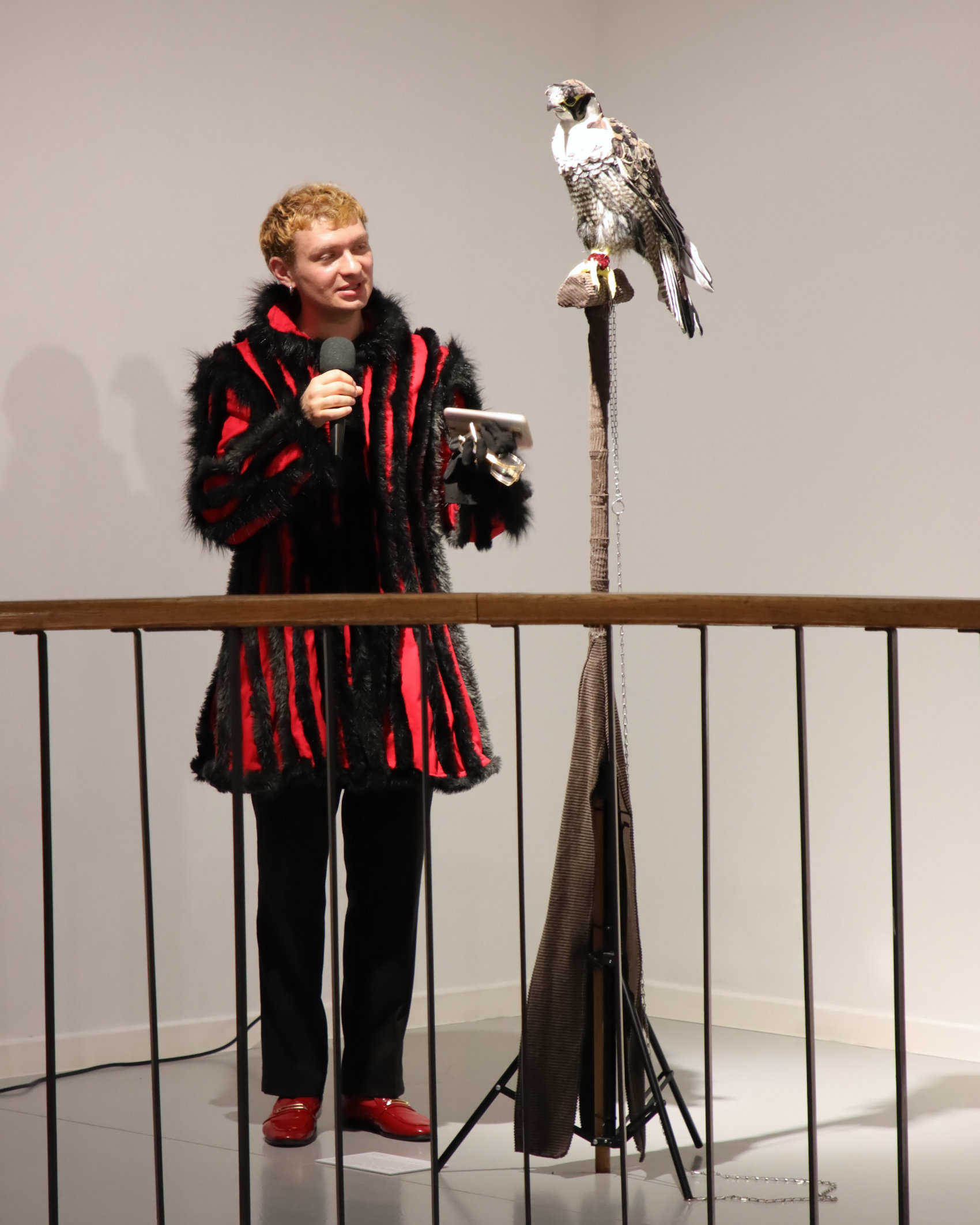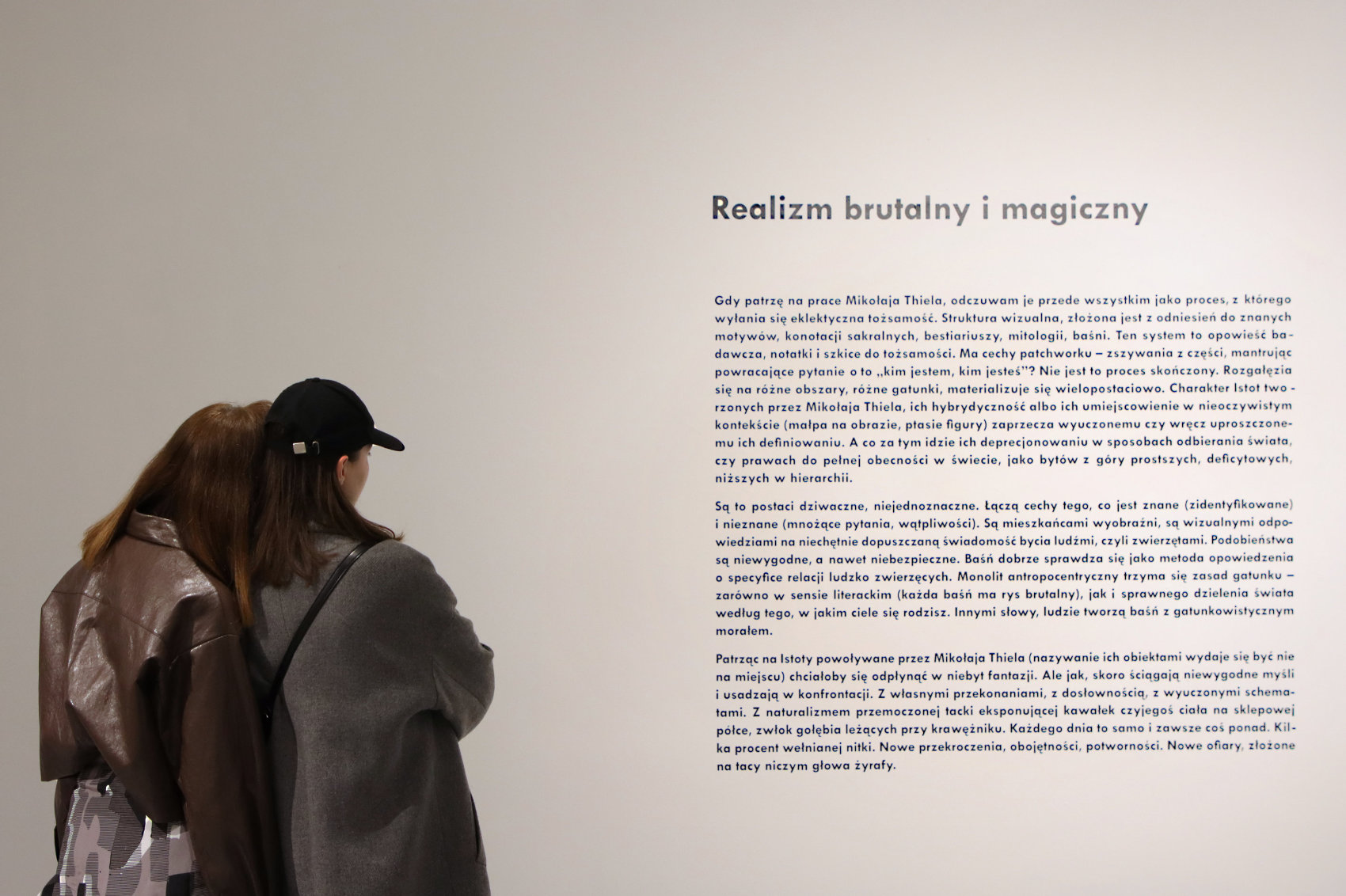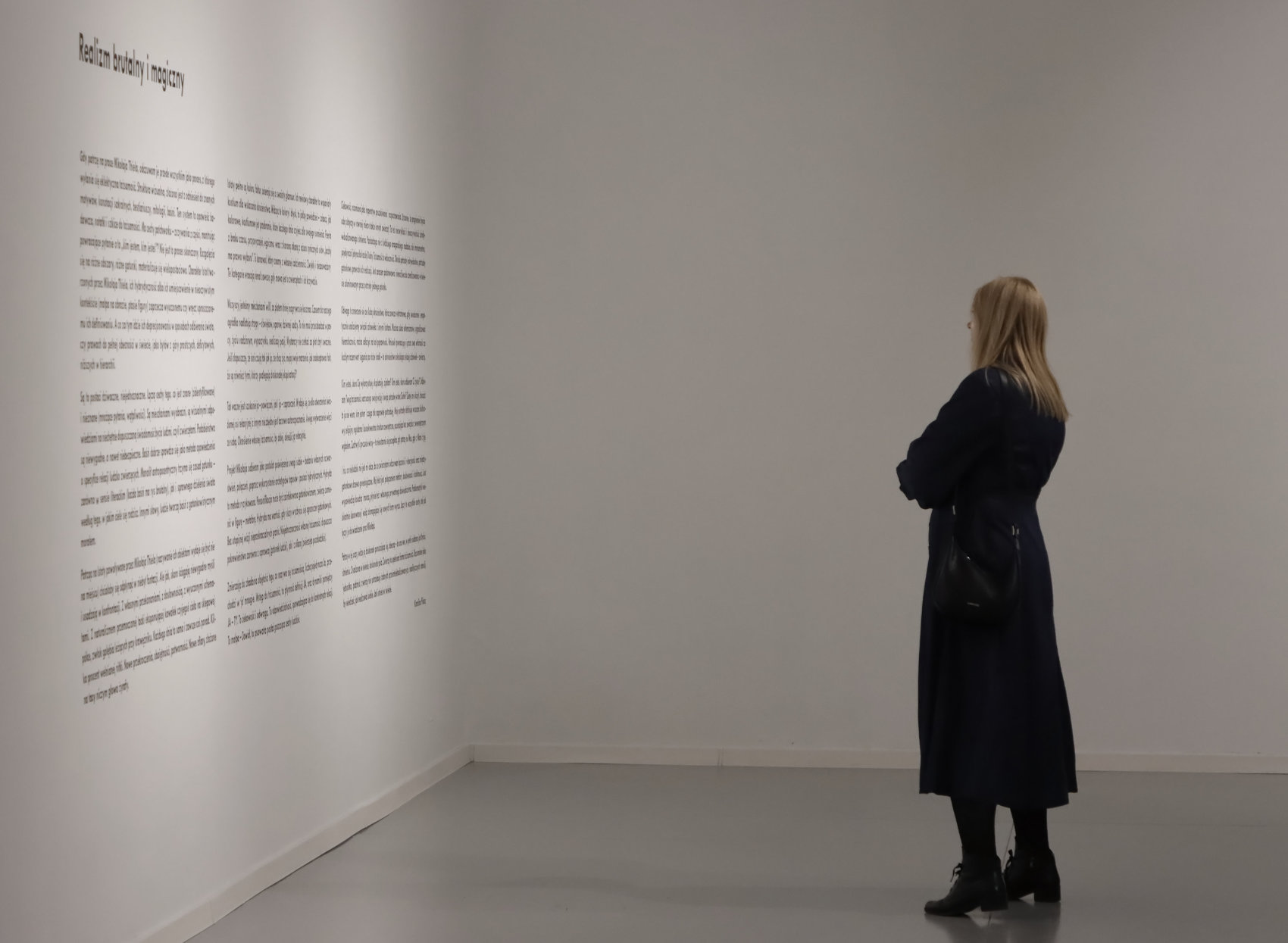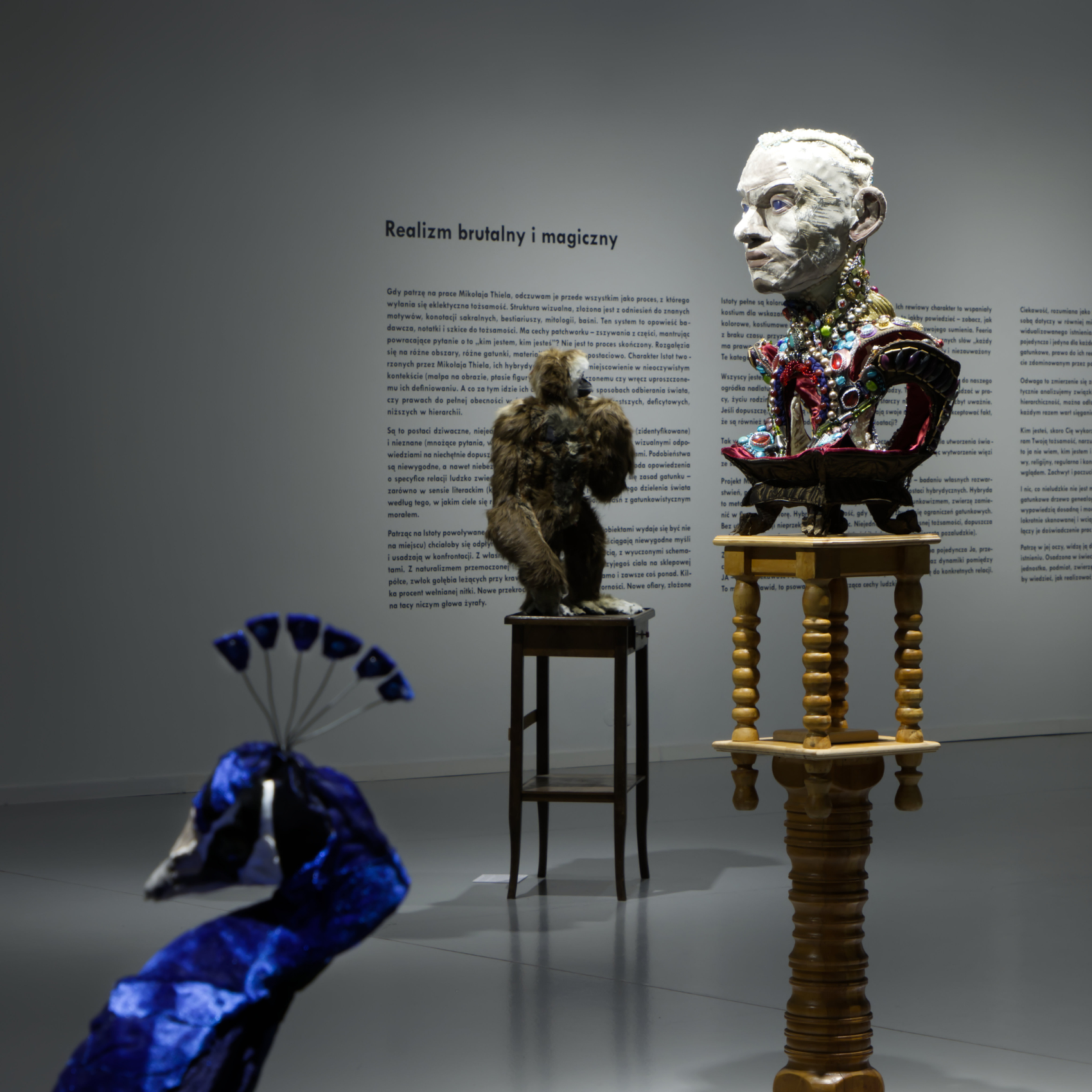

Brutal and magical realism
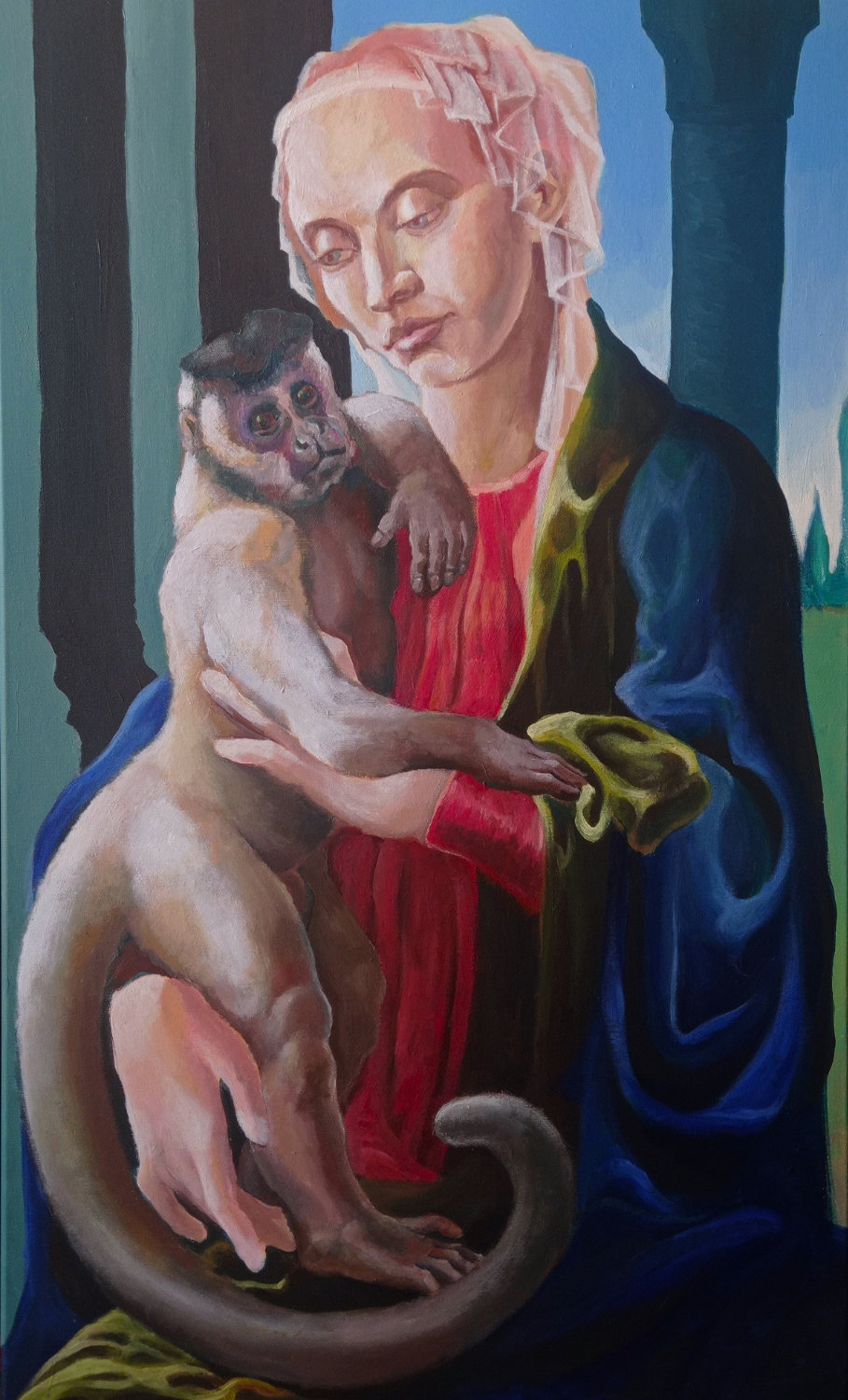
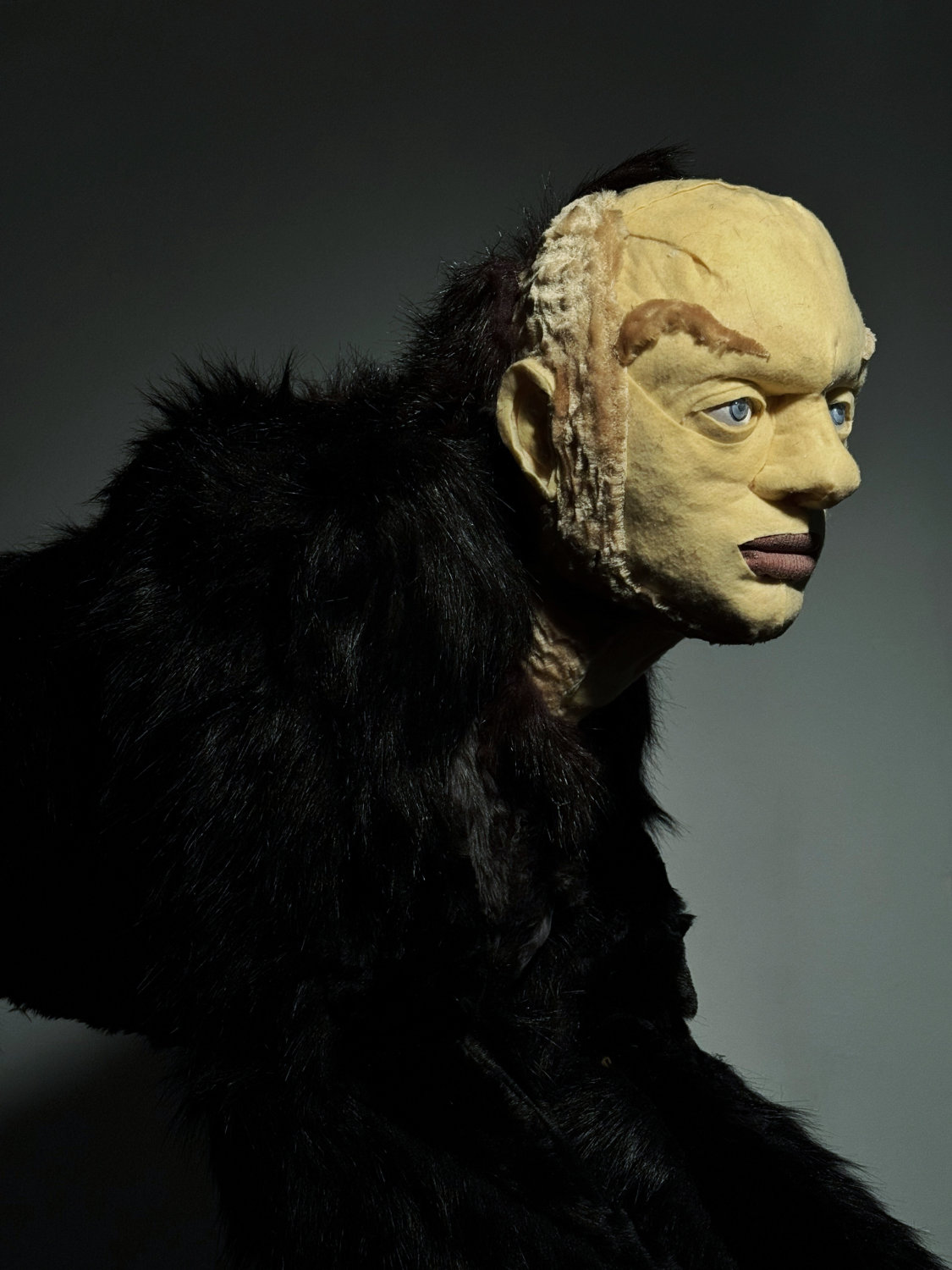
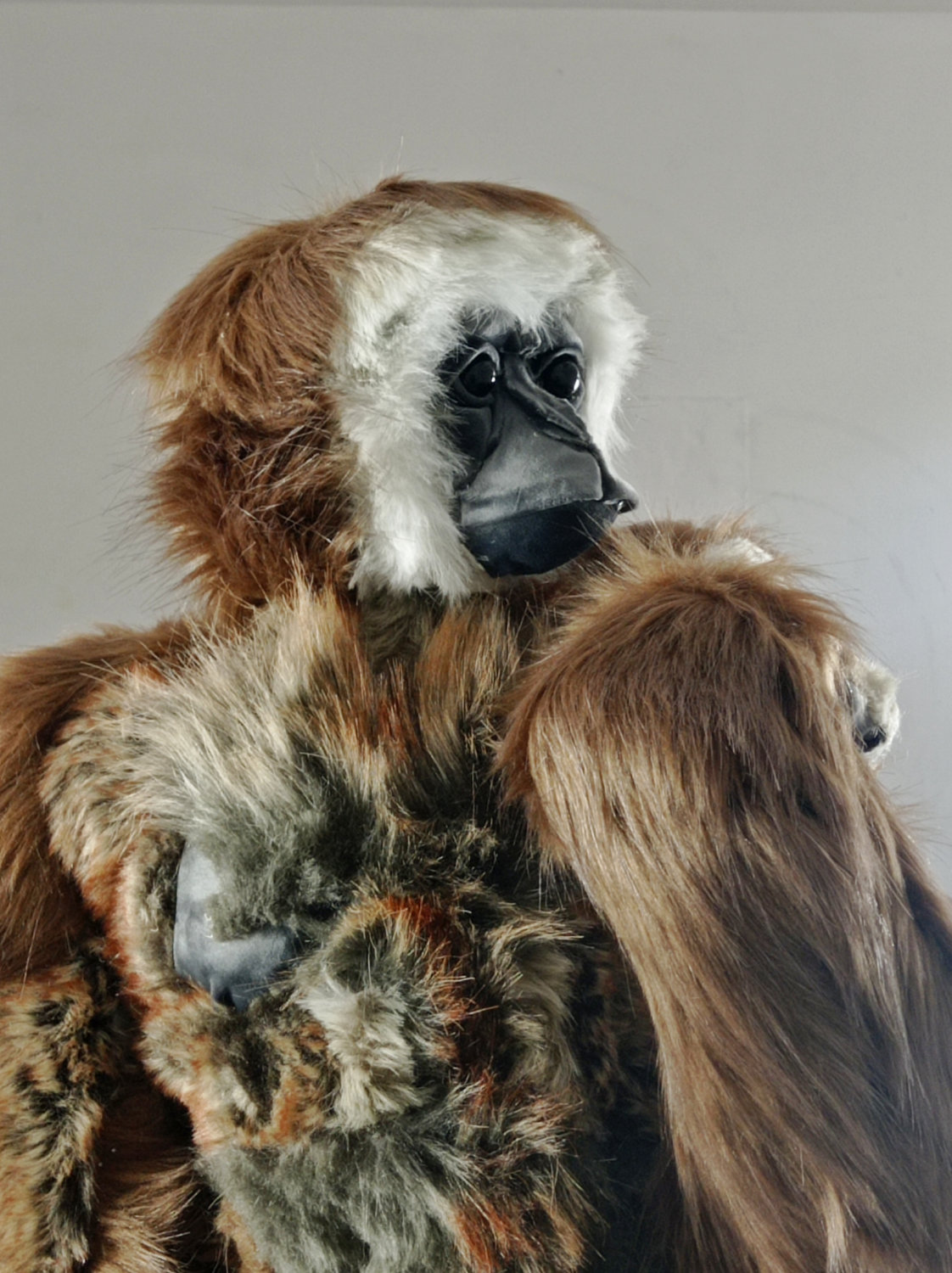
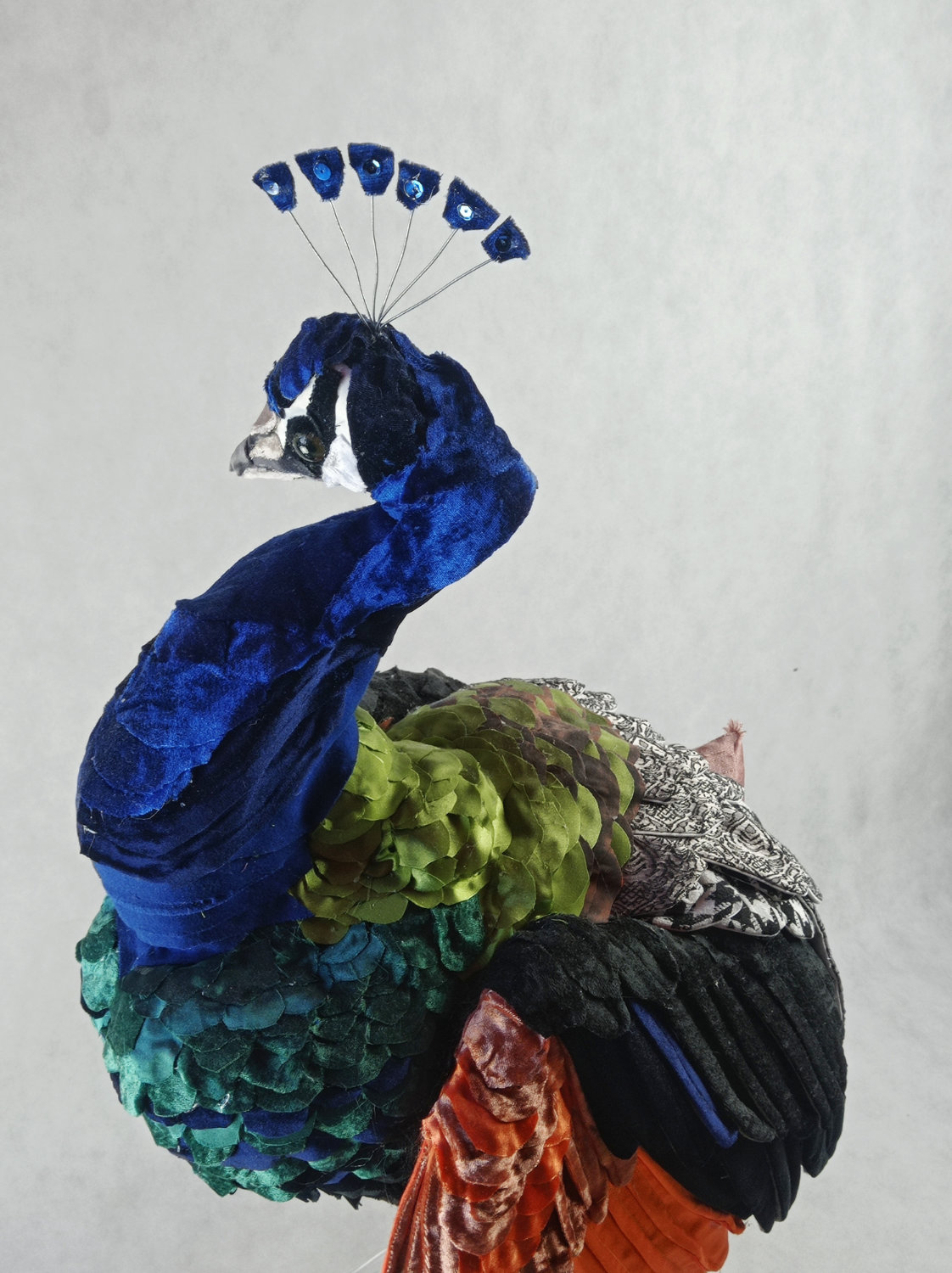
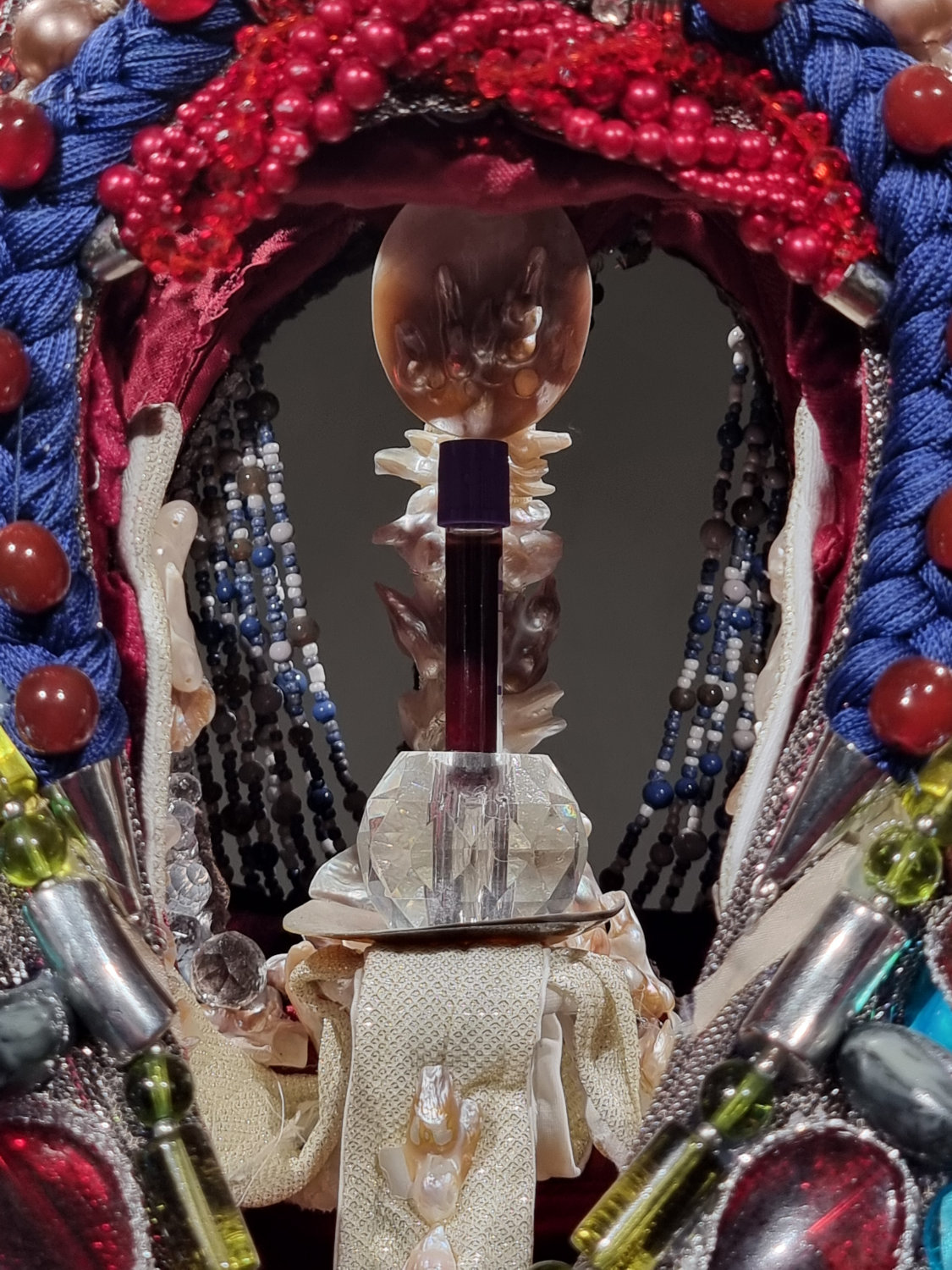
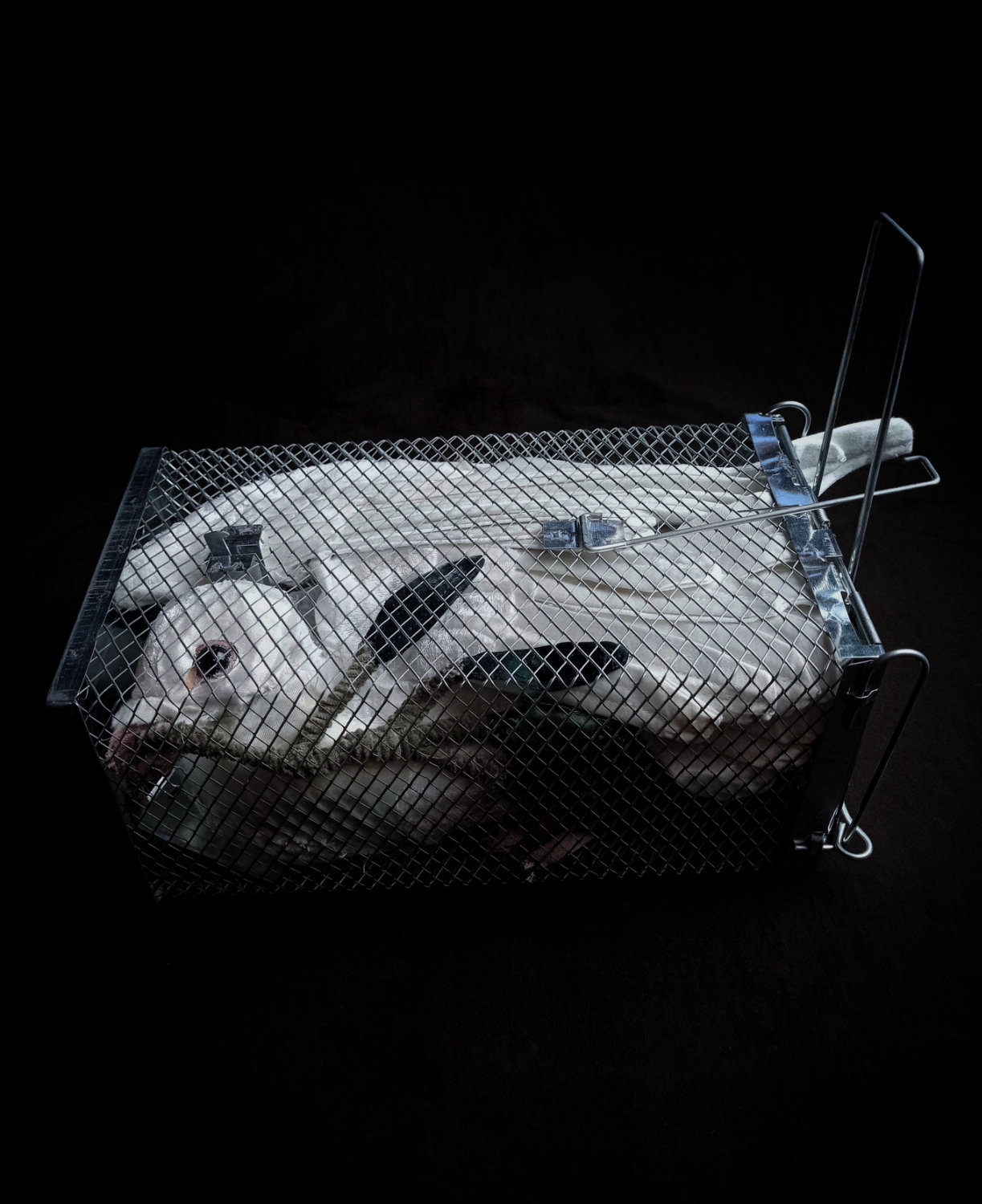
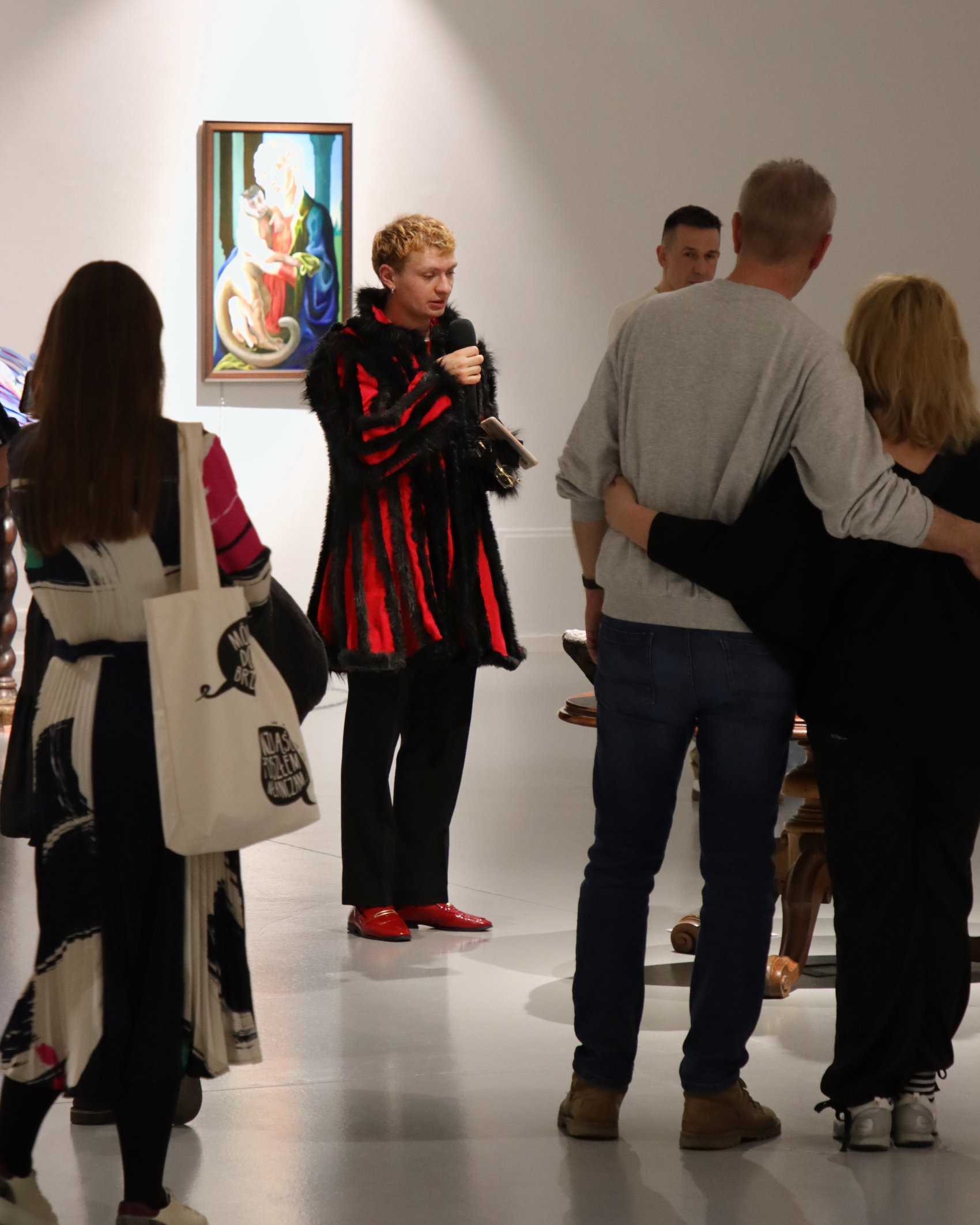
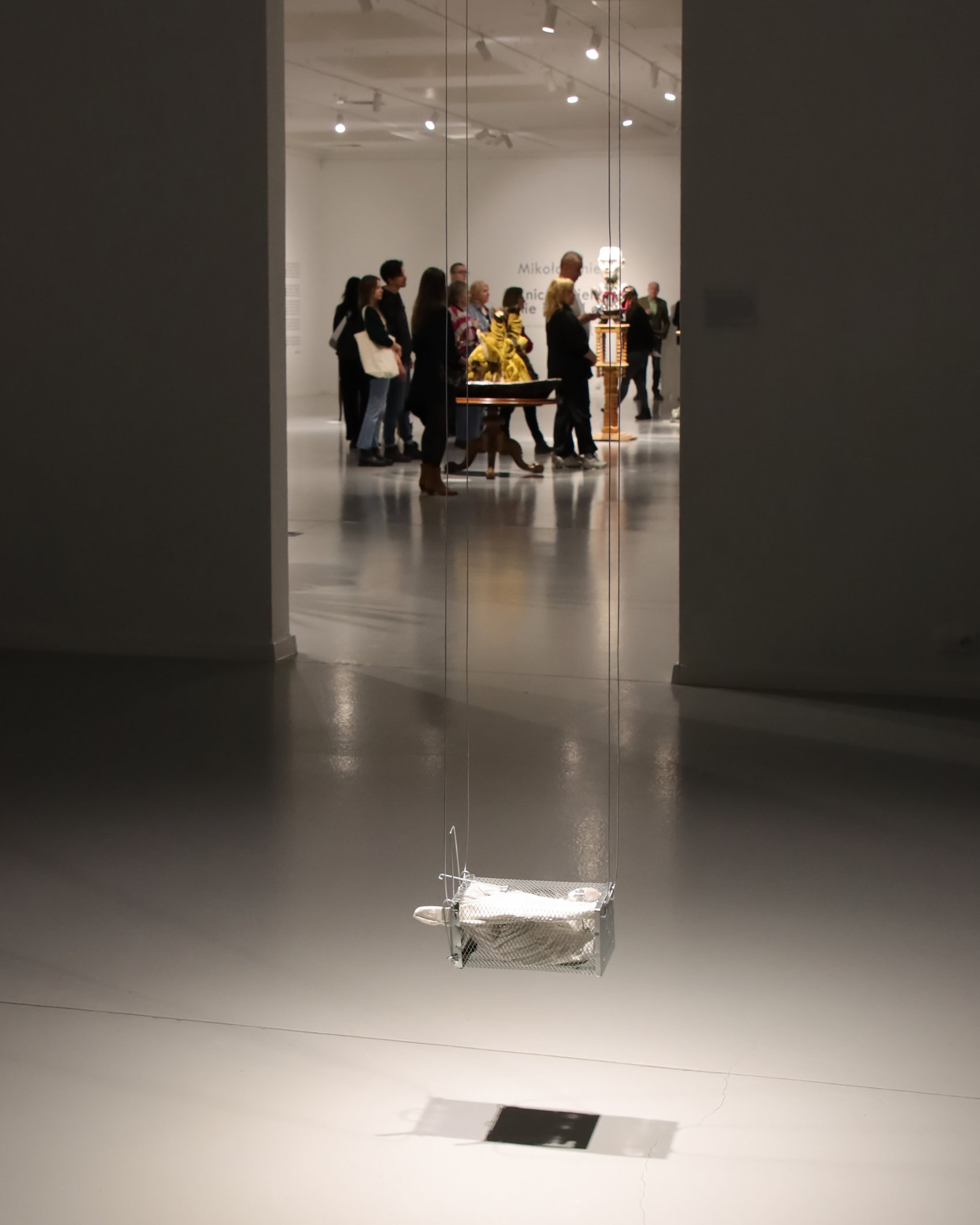
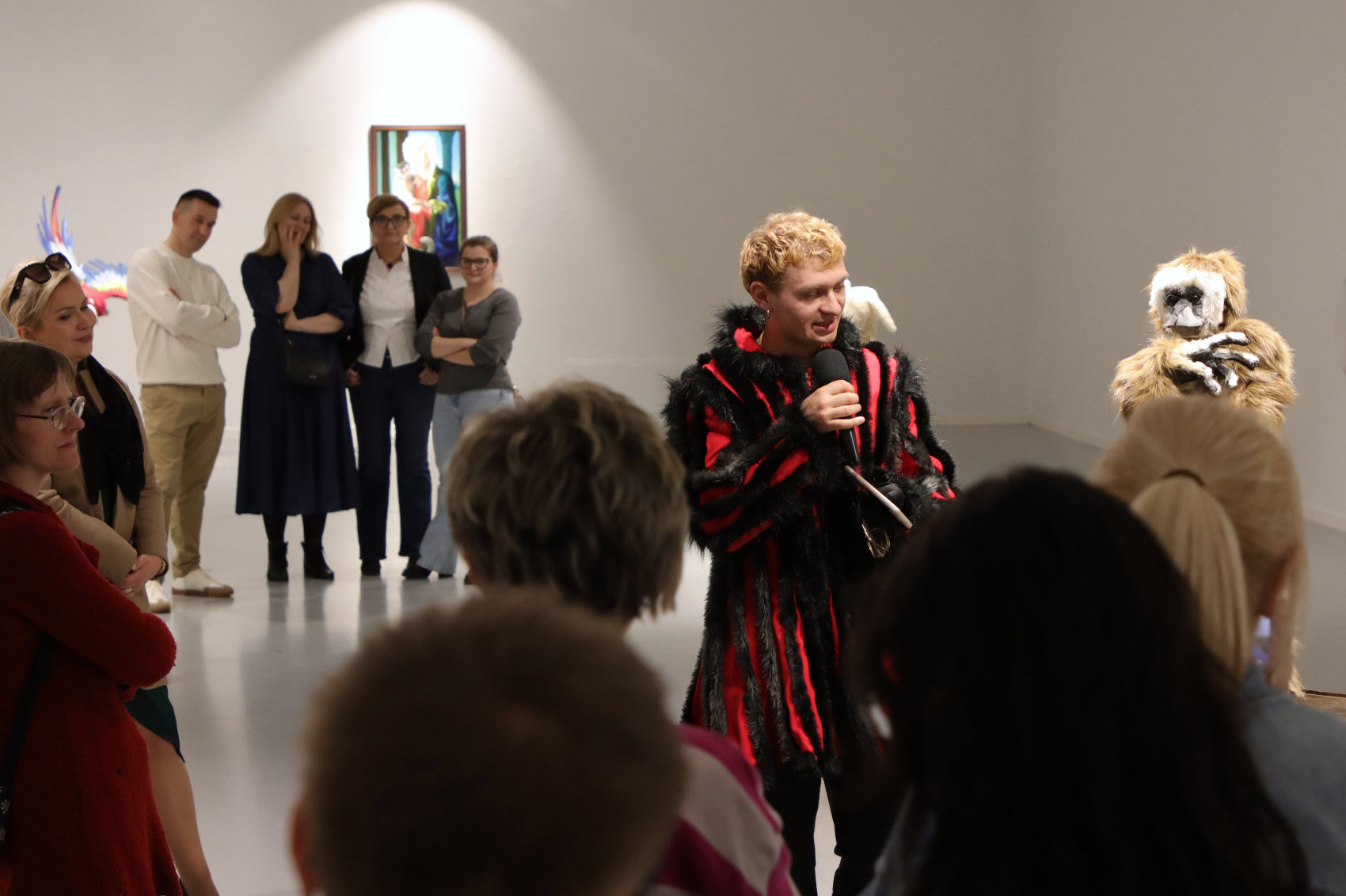
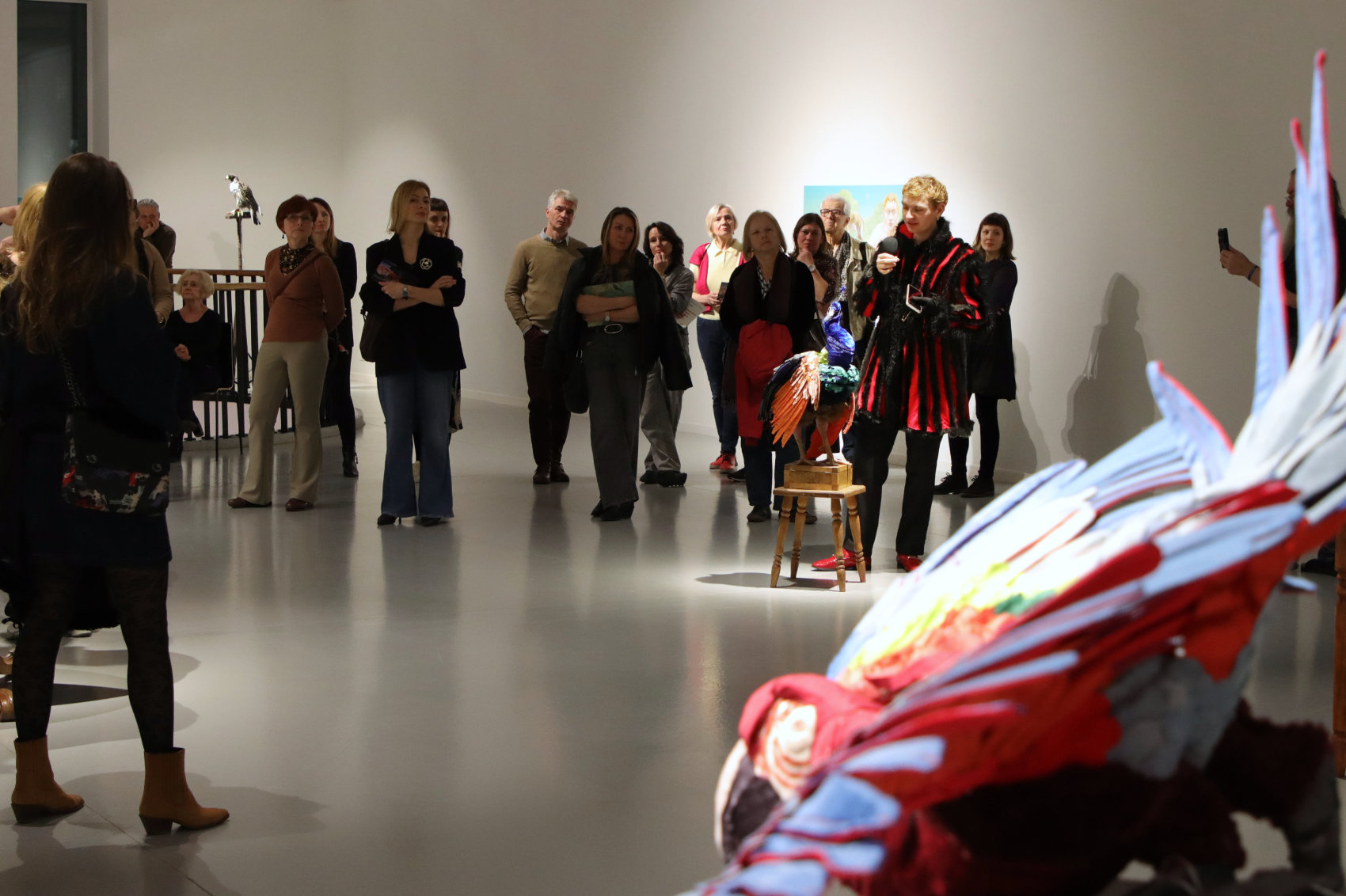
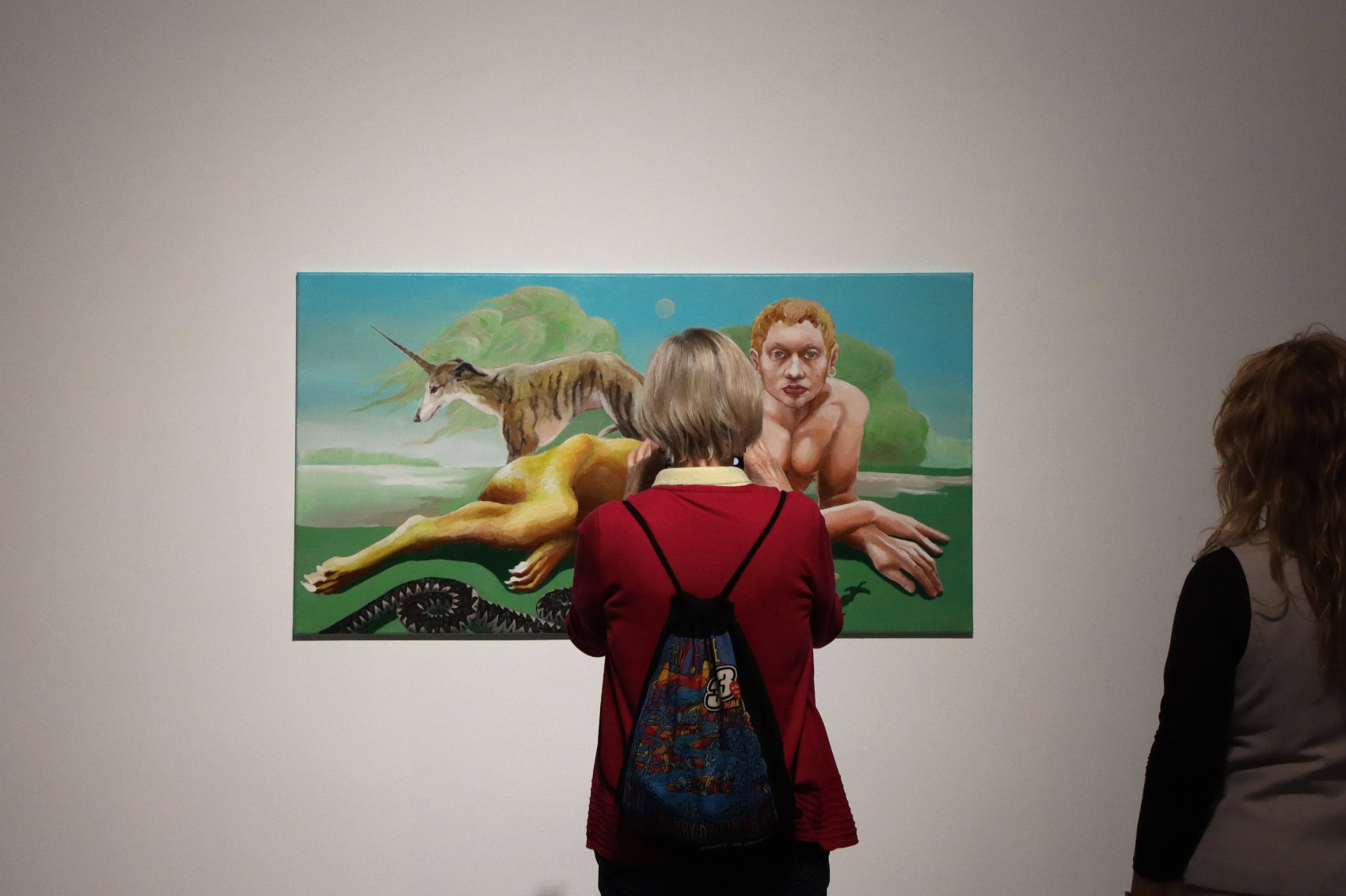
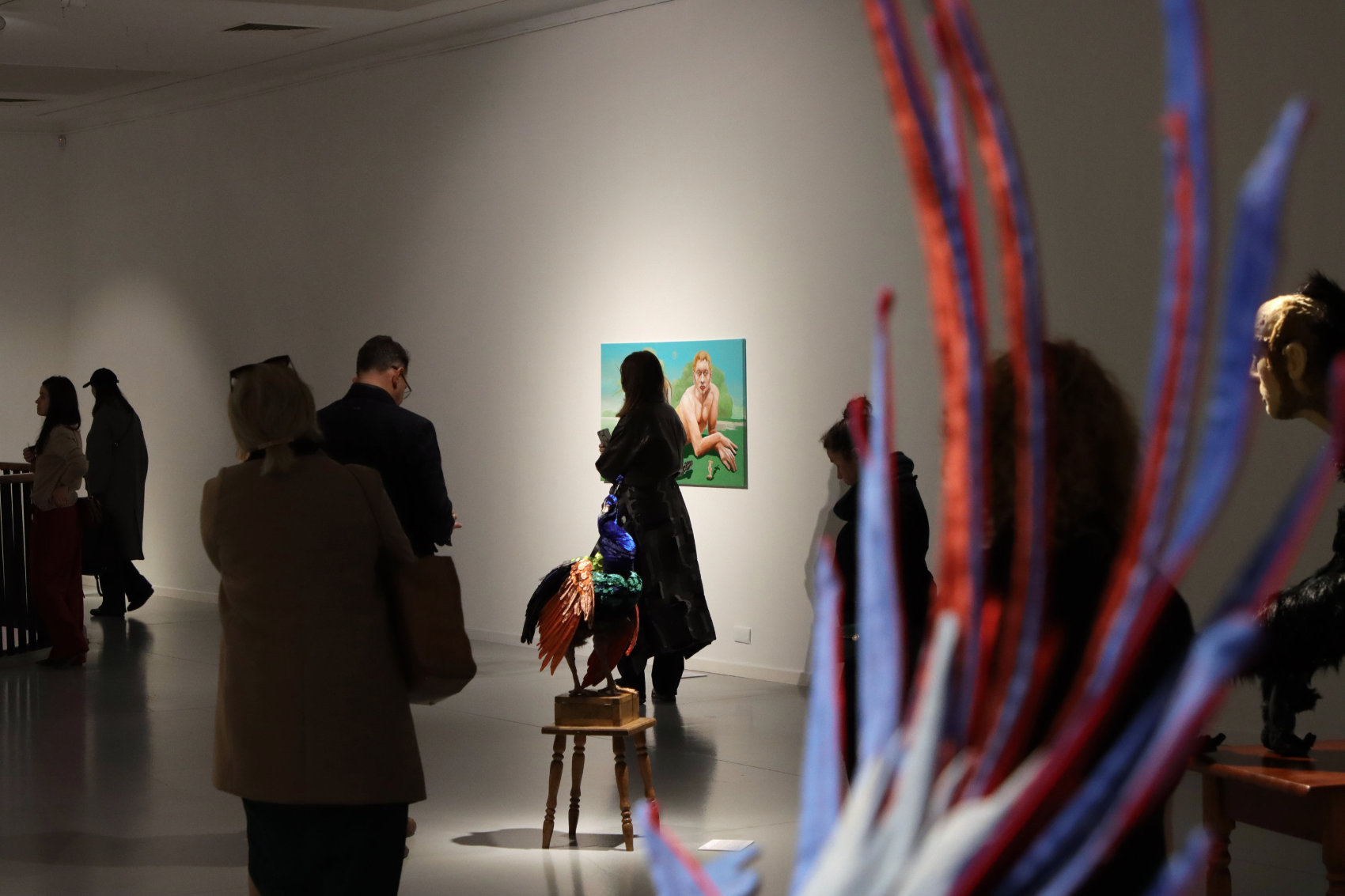
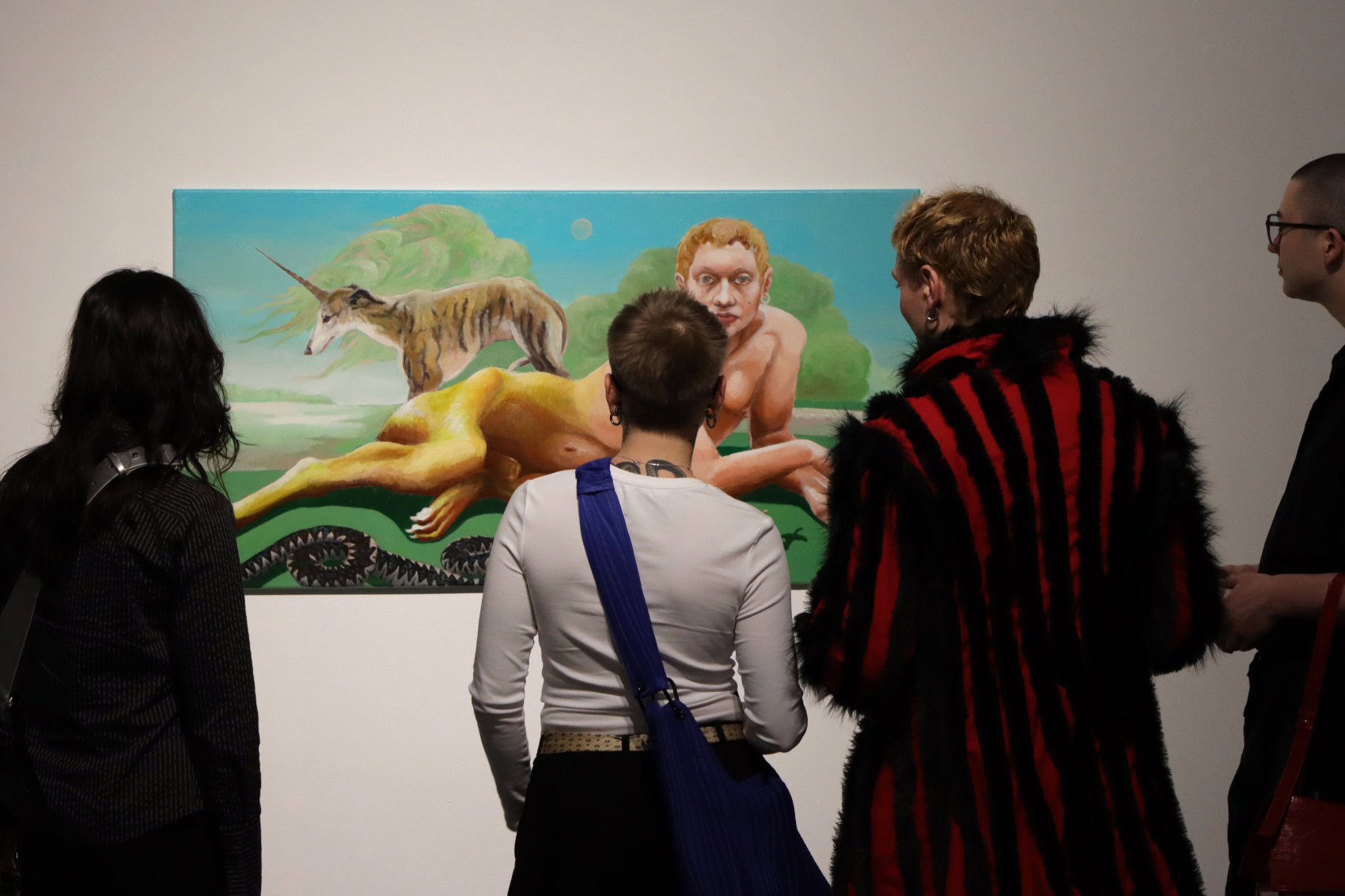
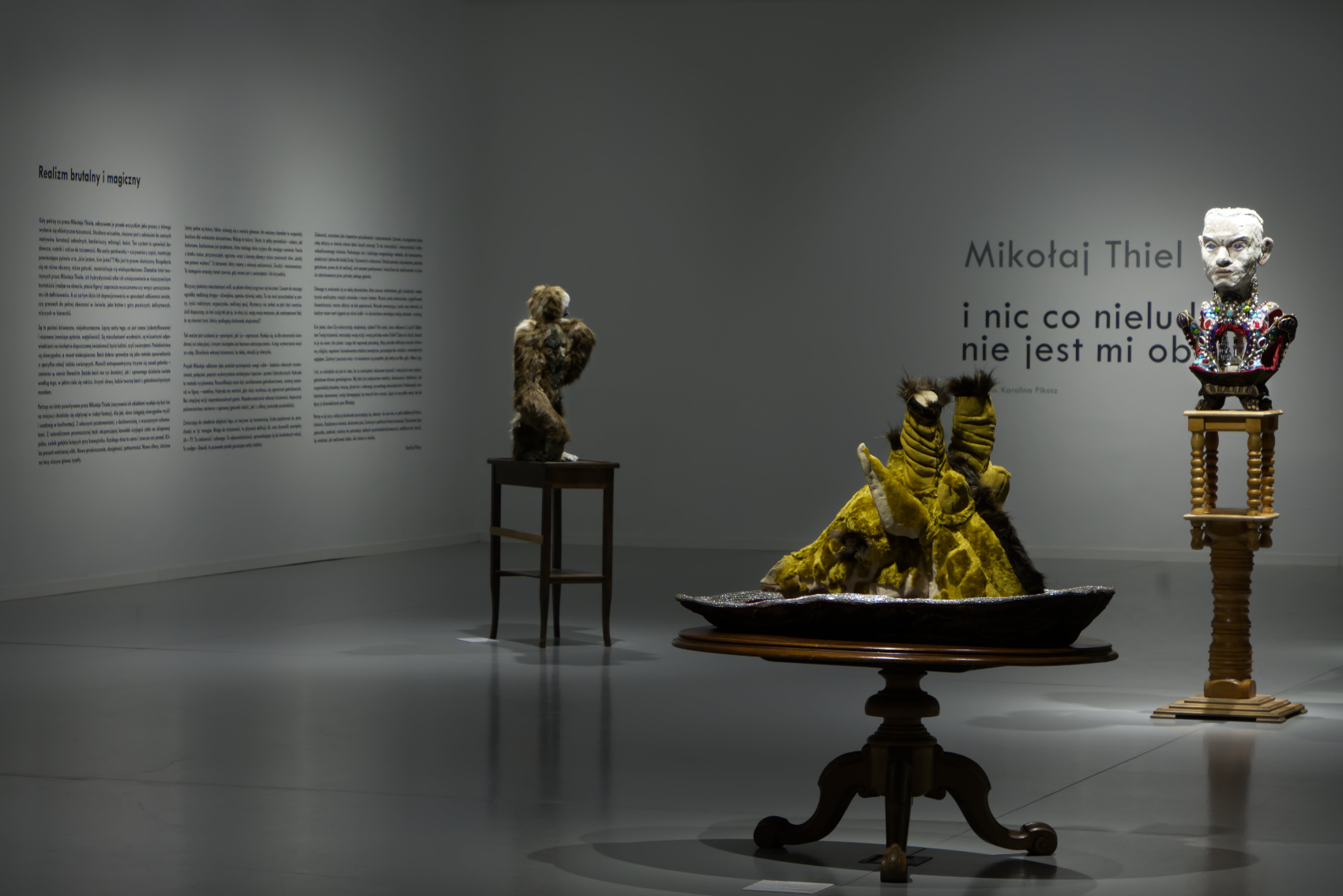
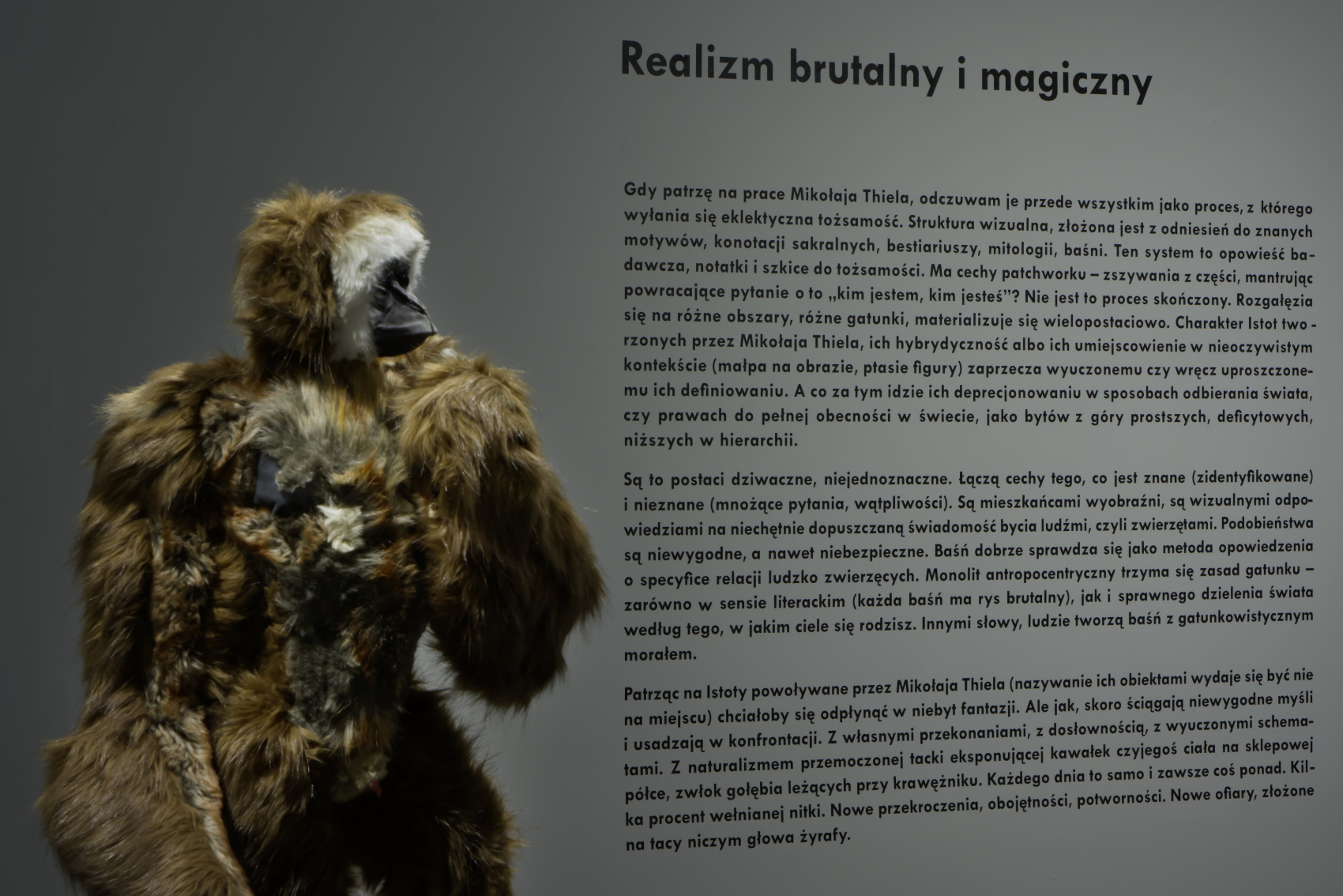
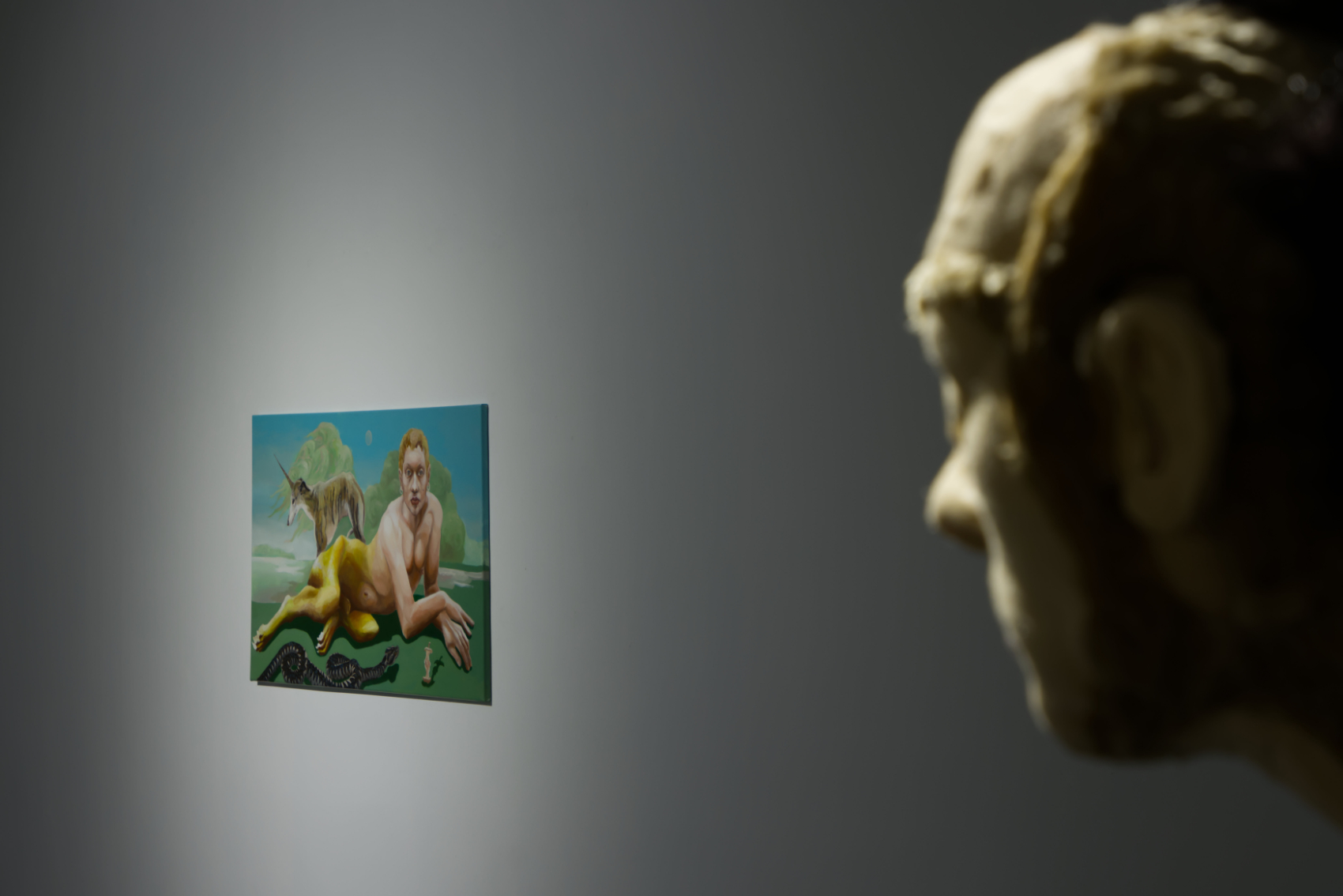
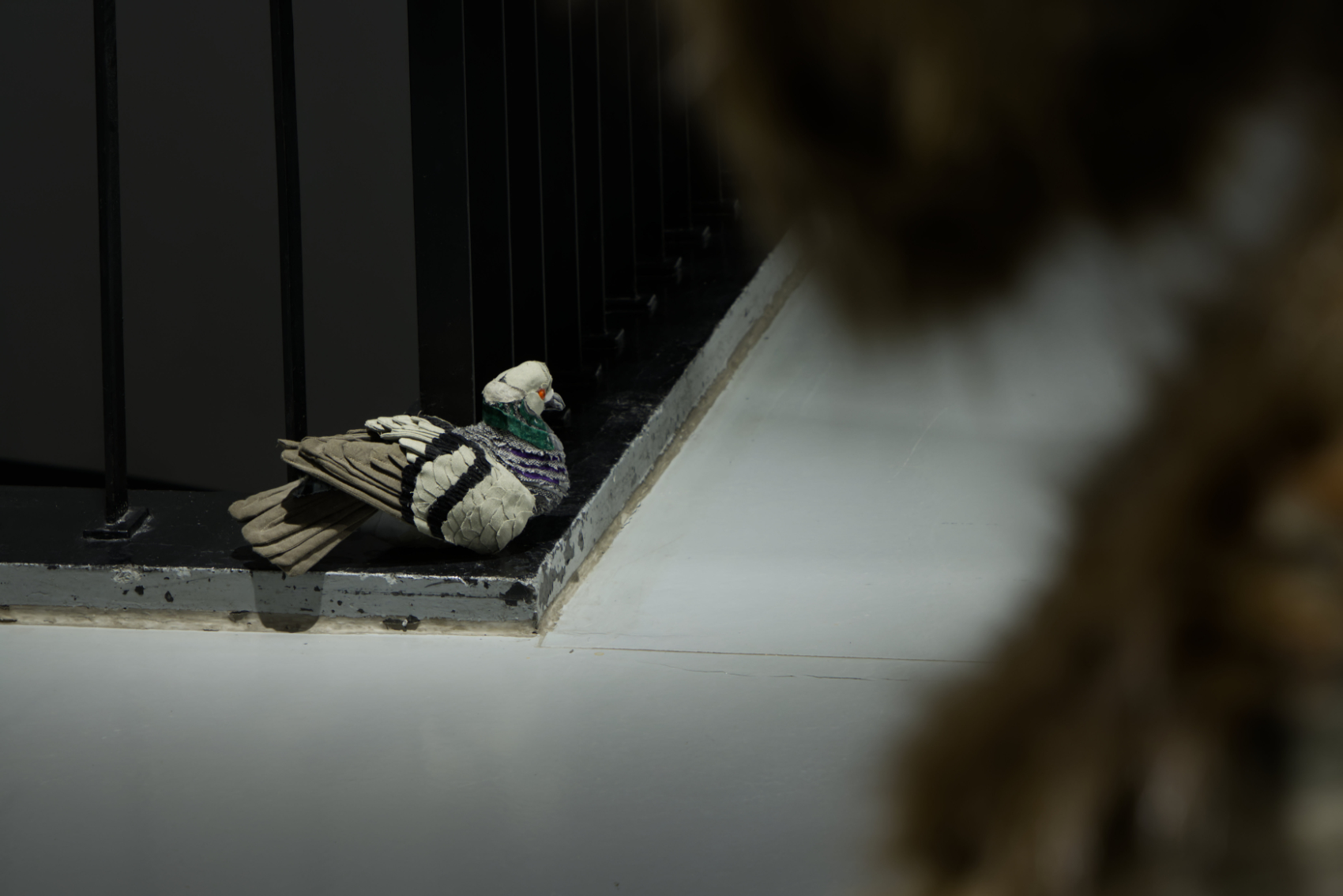
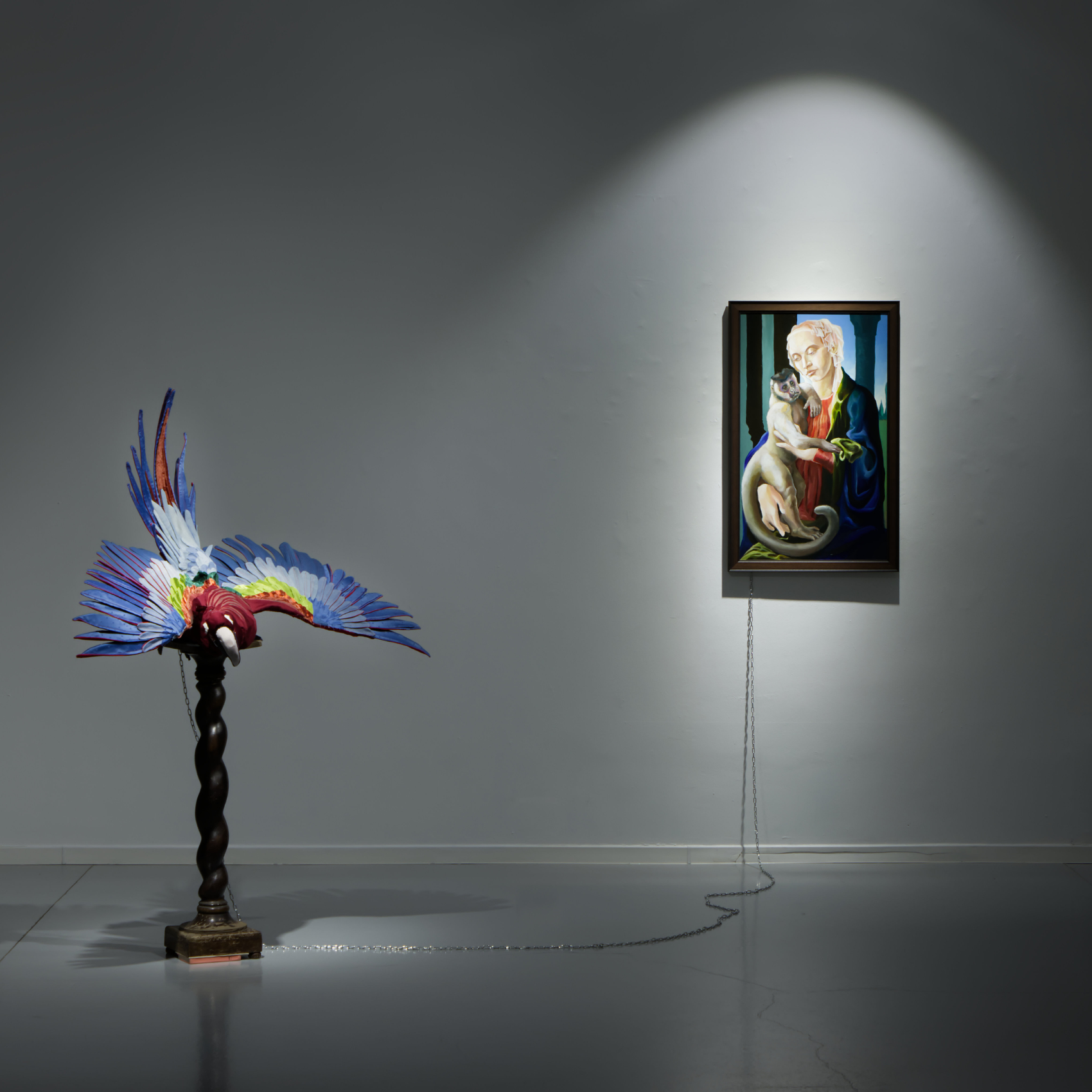
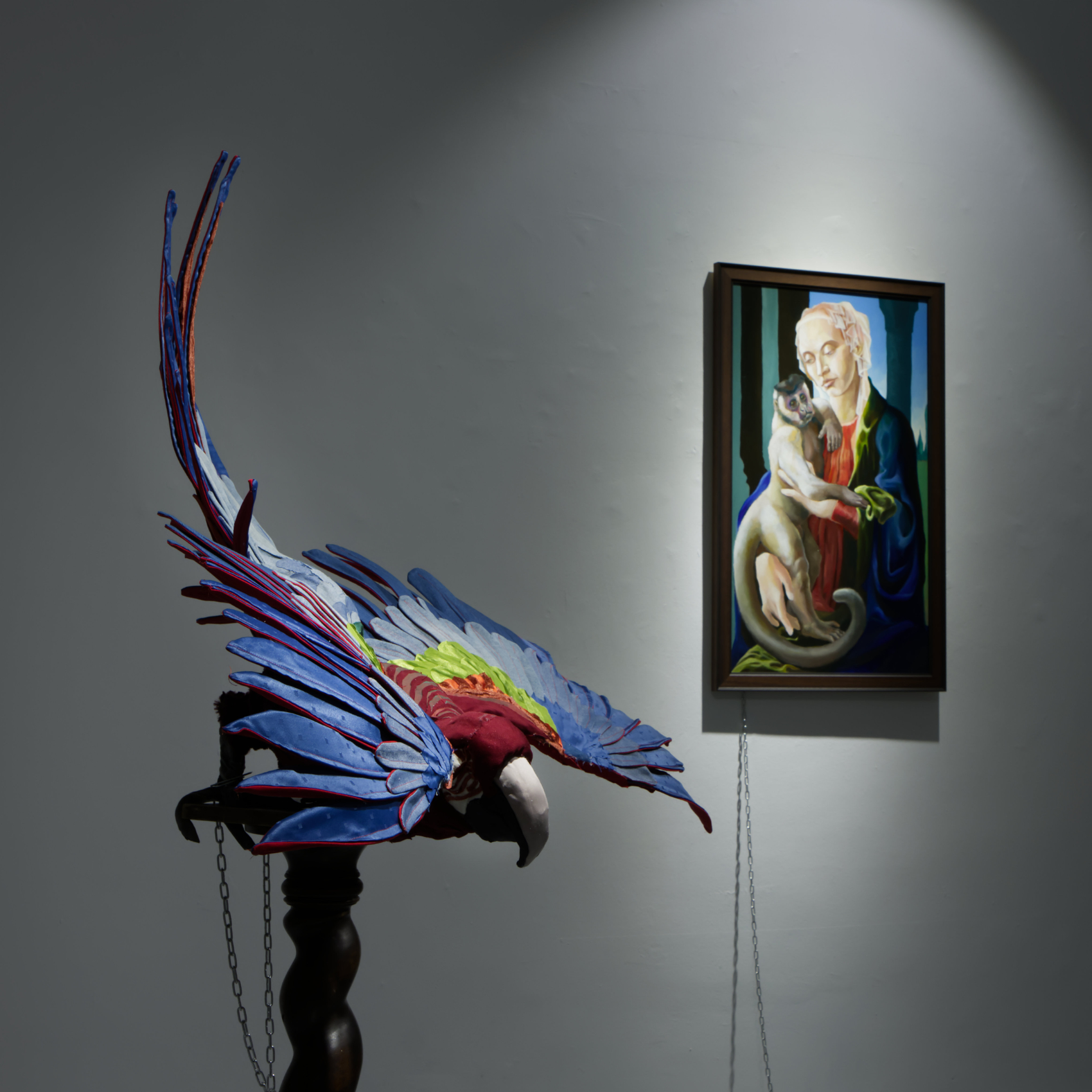
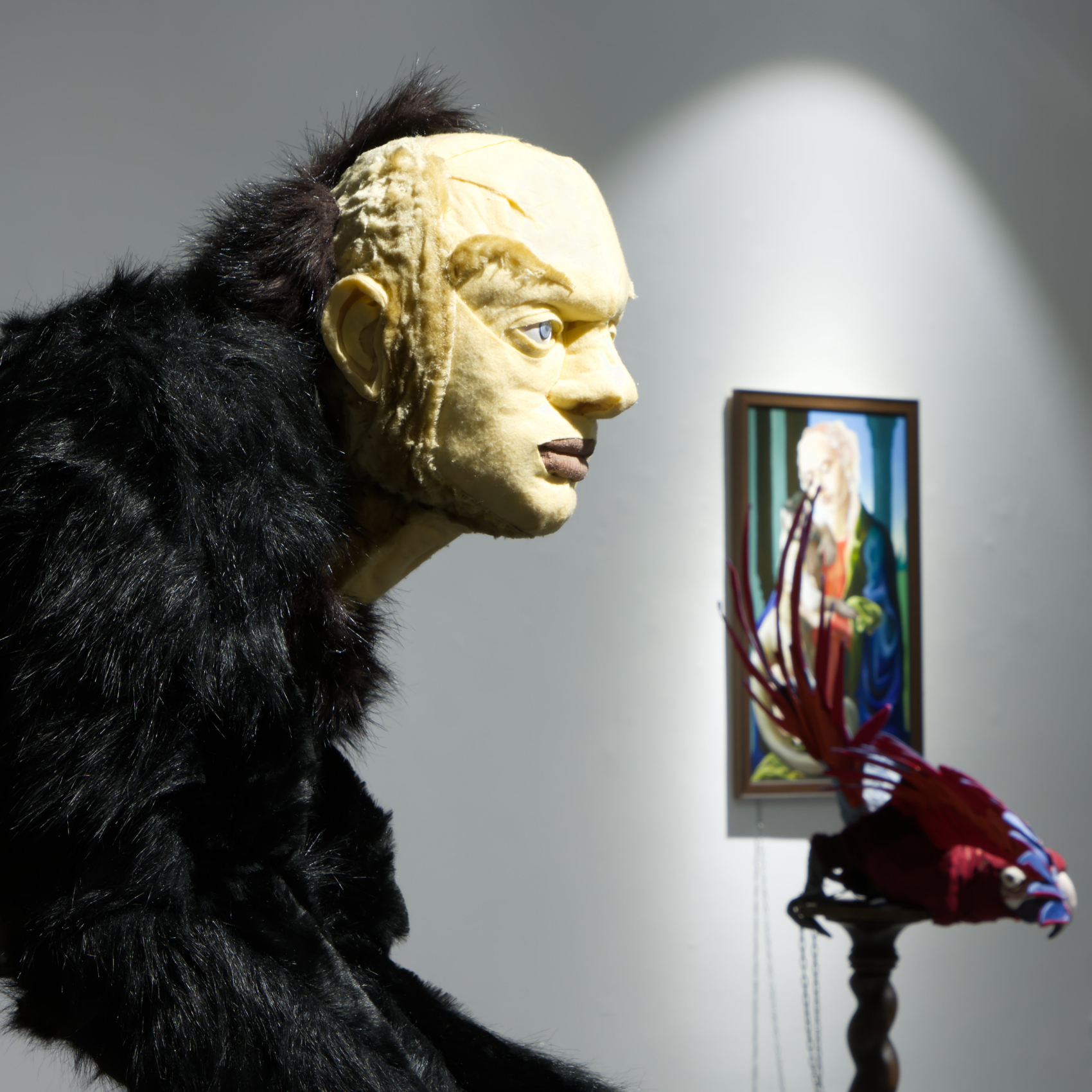
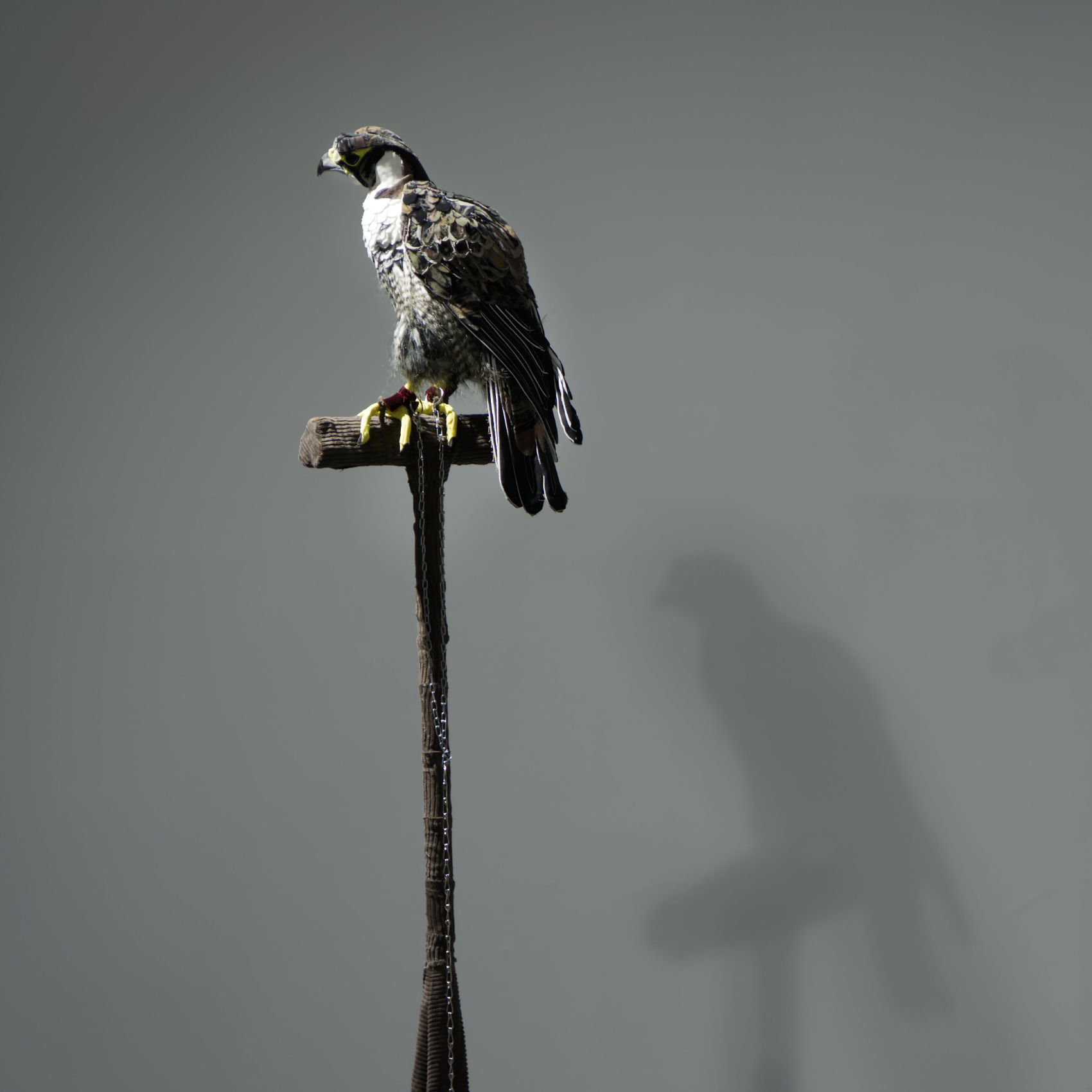
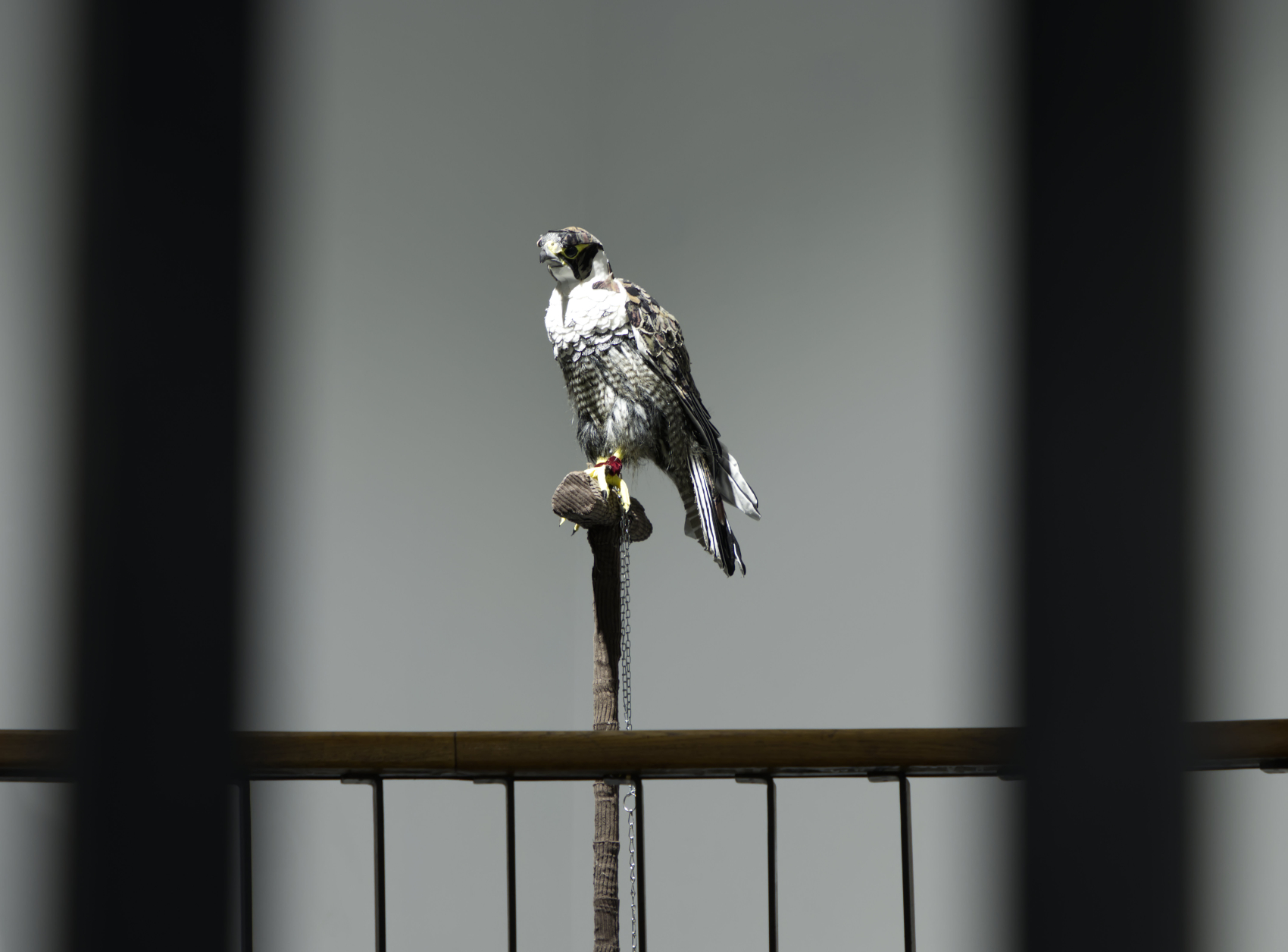
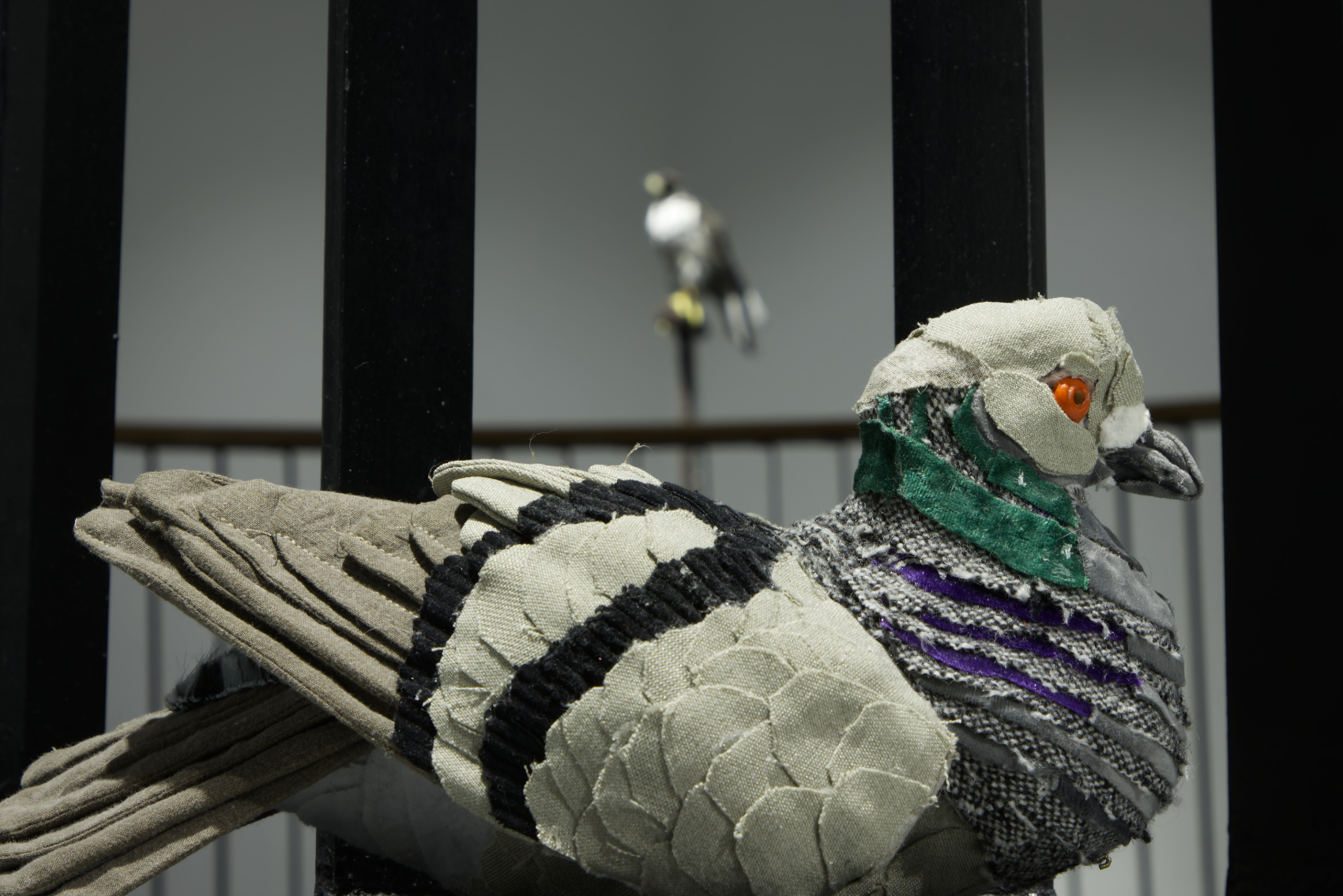
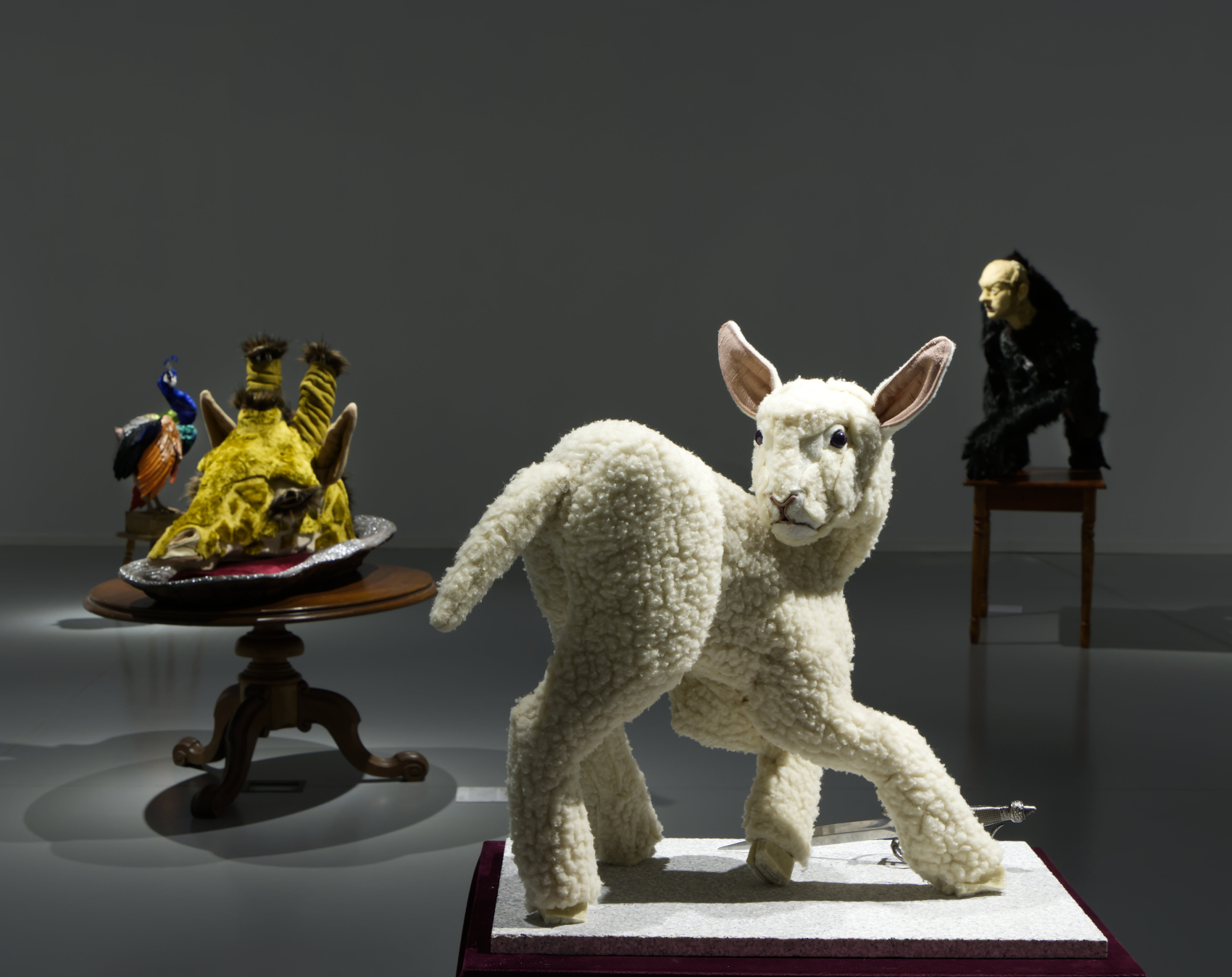
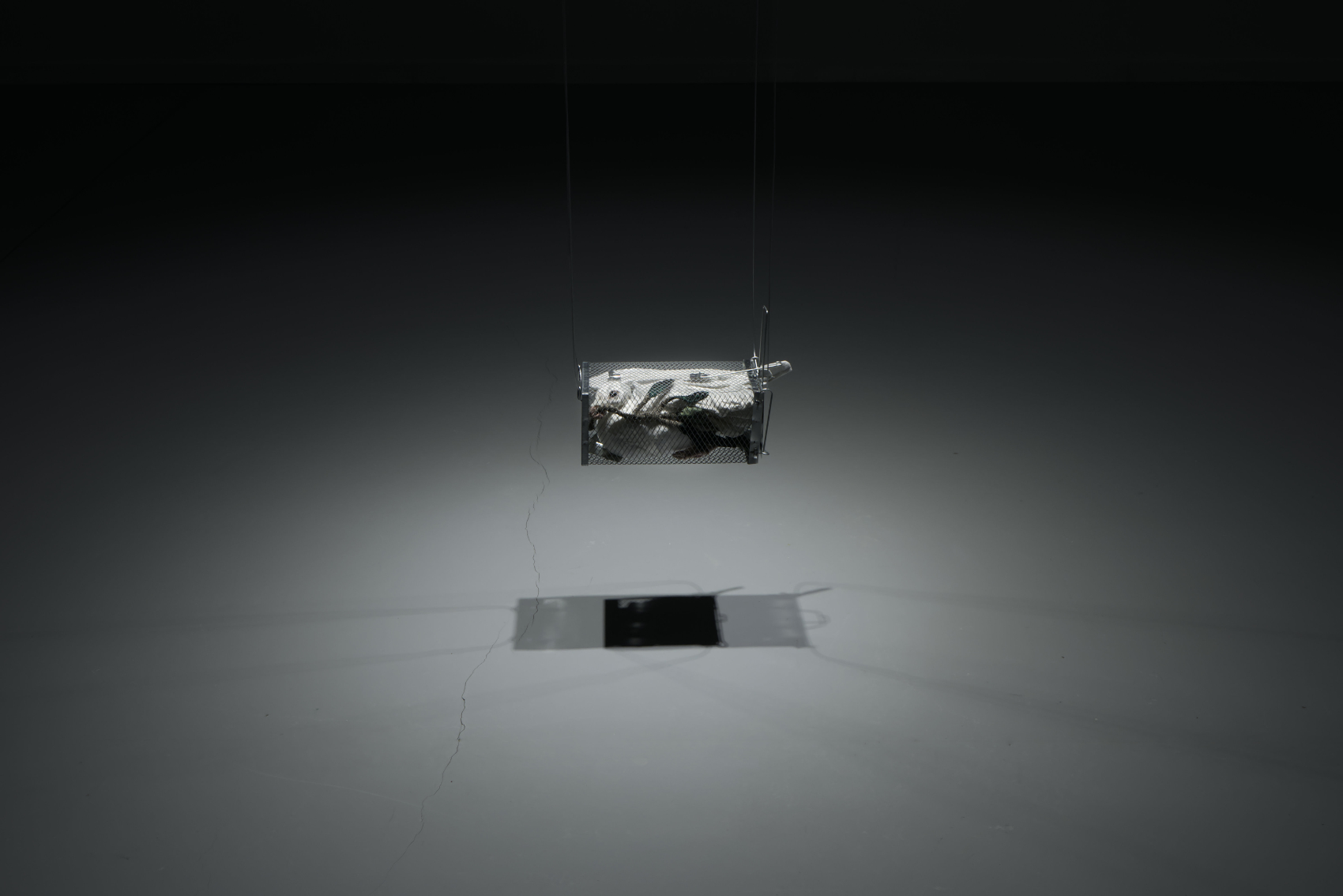
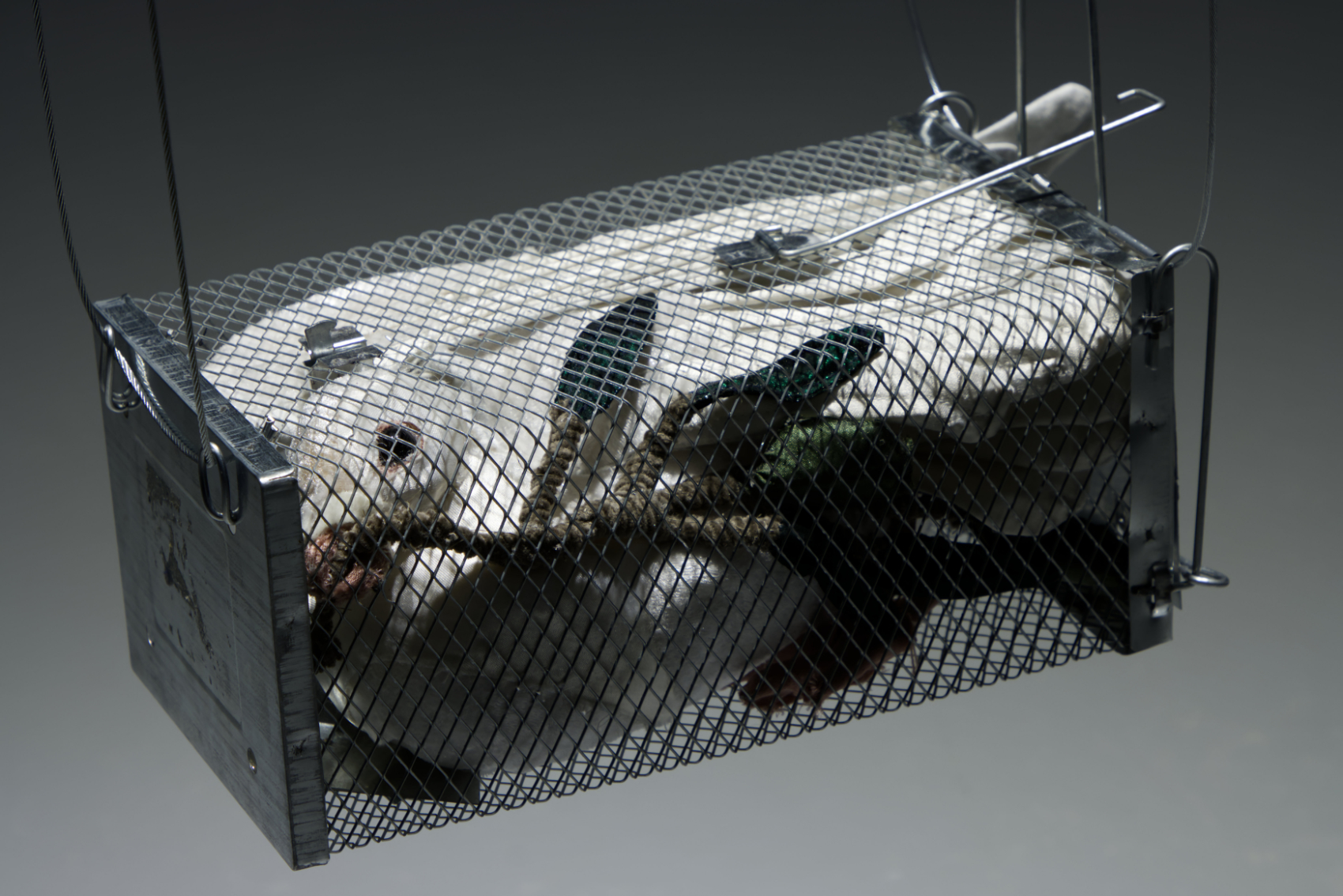
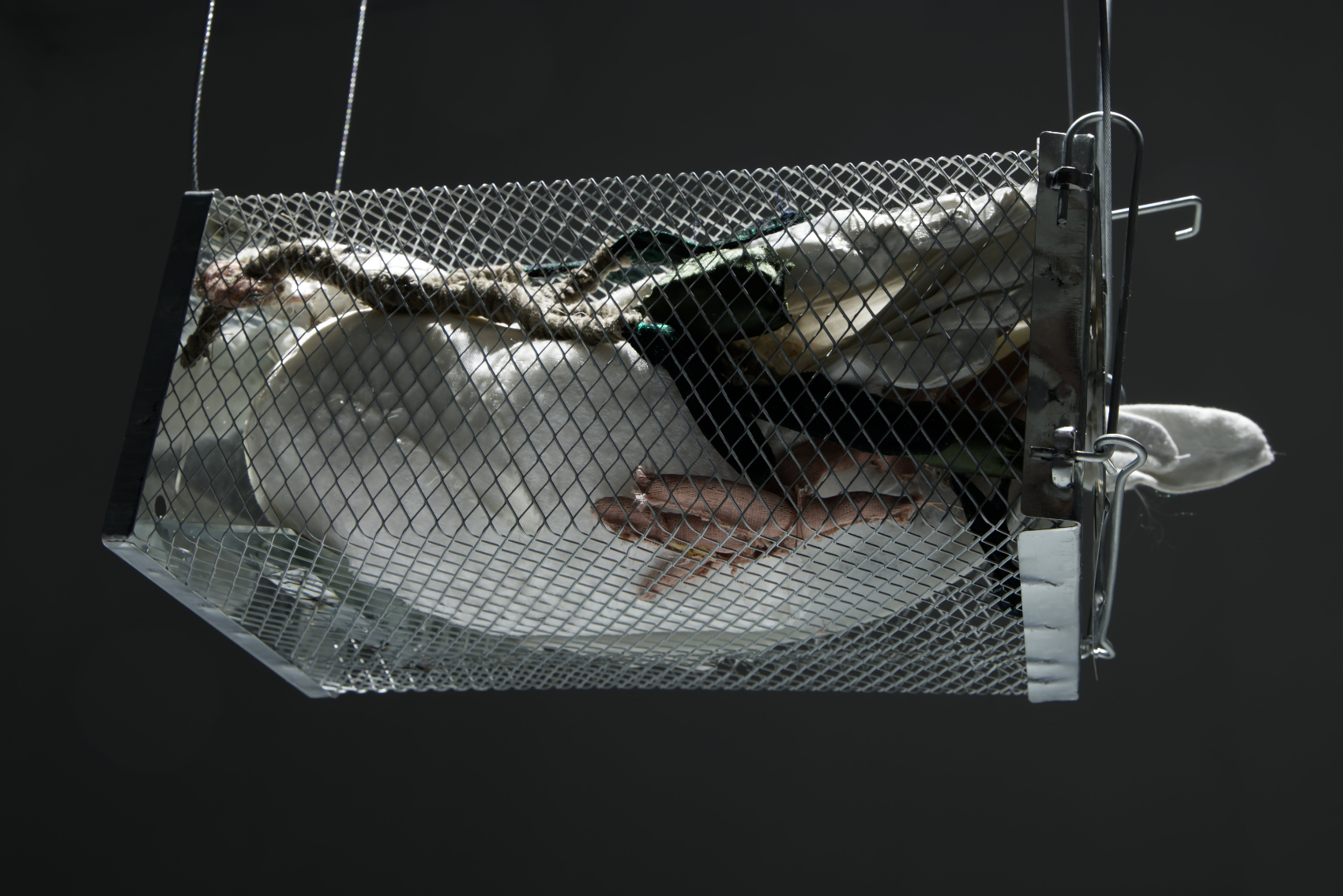
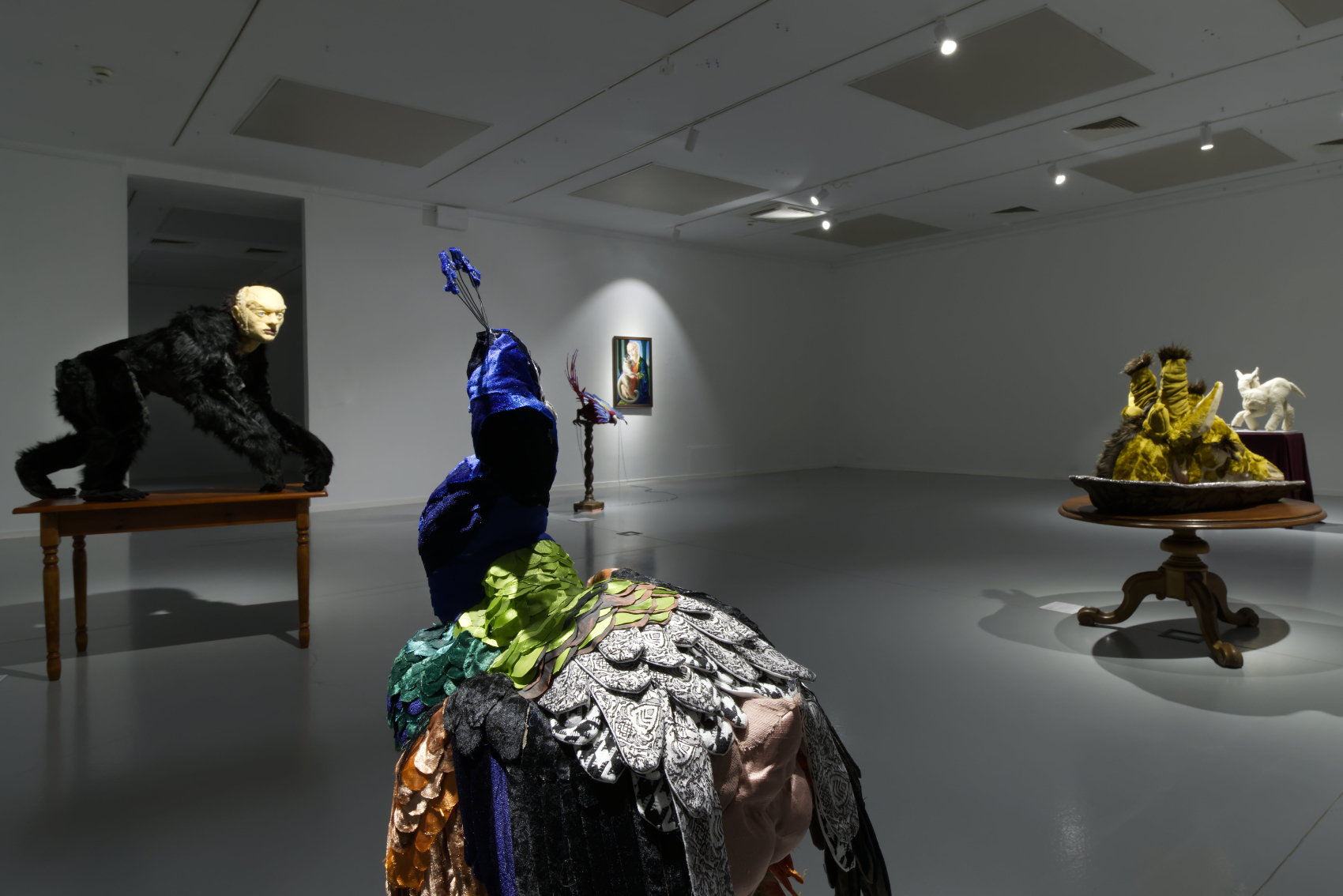
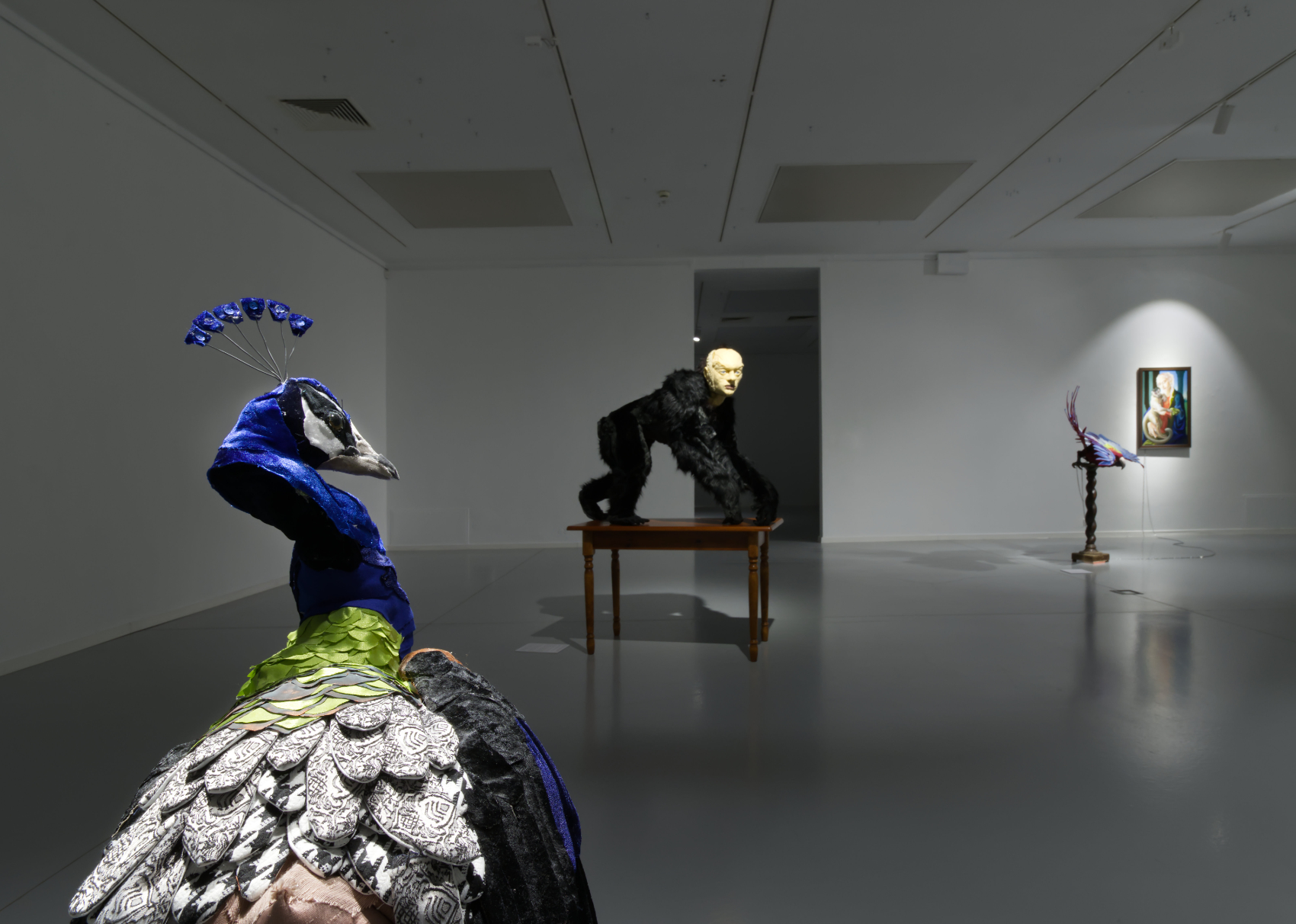
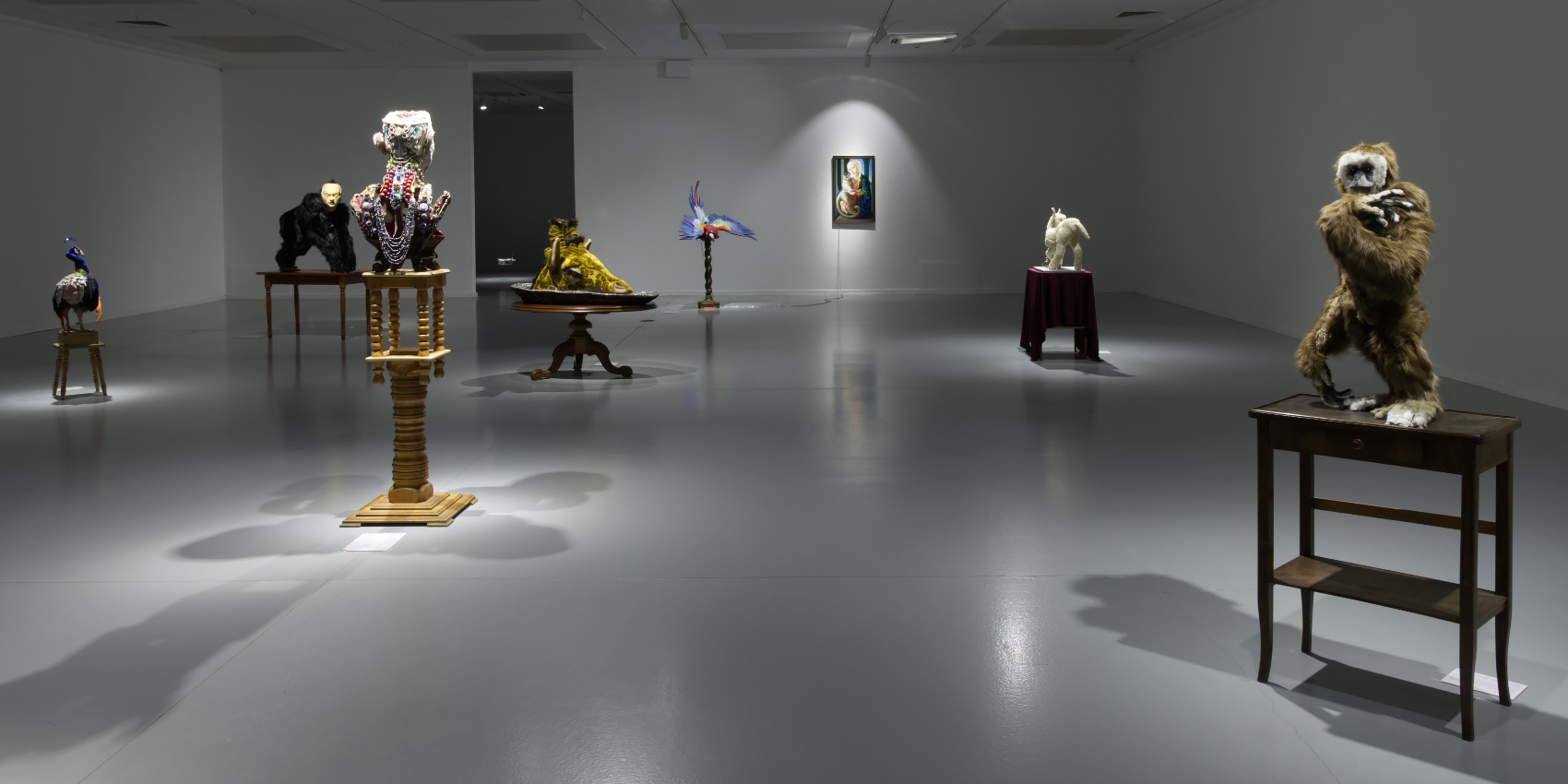
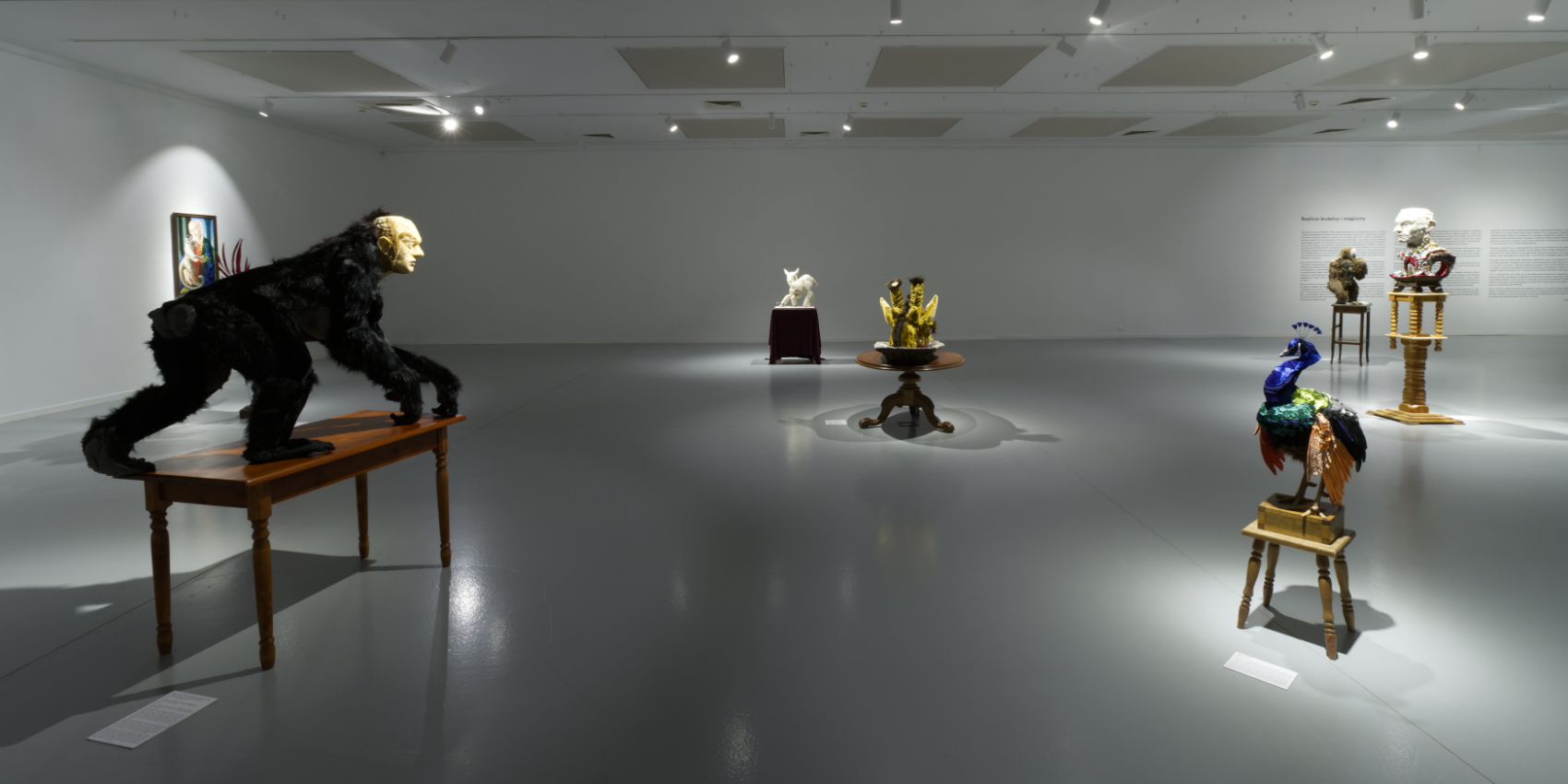
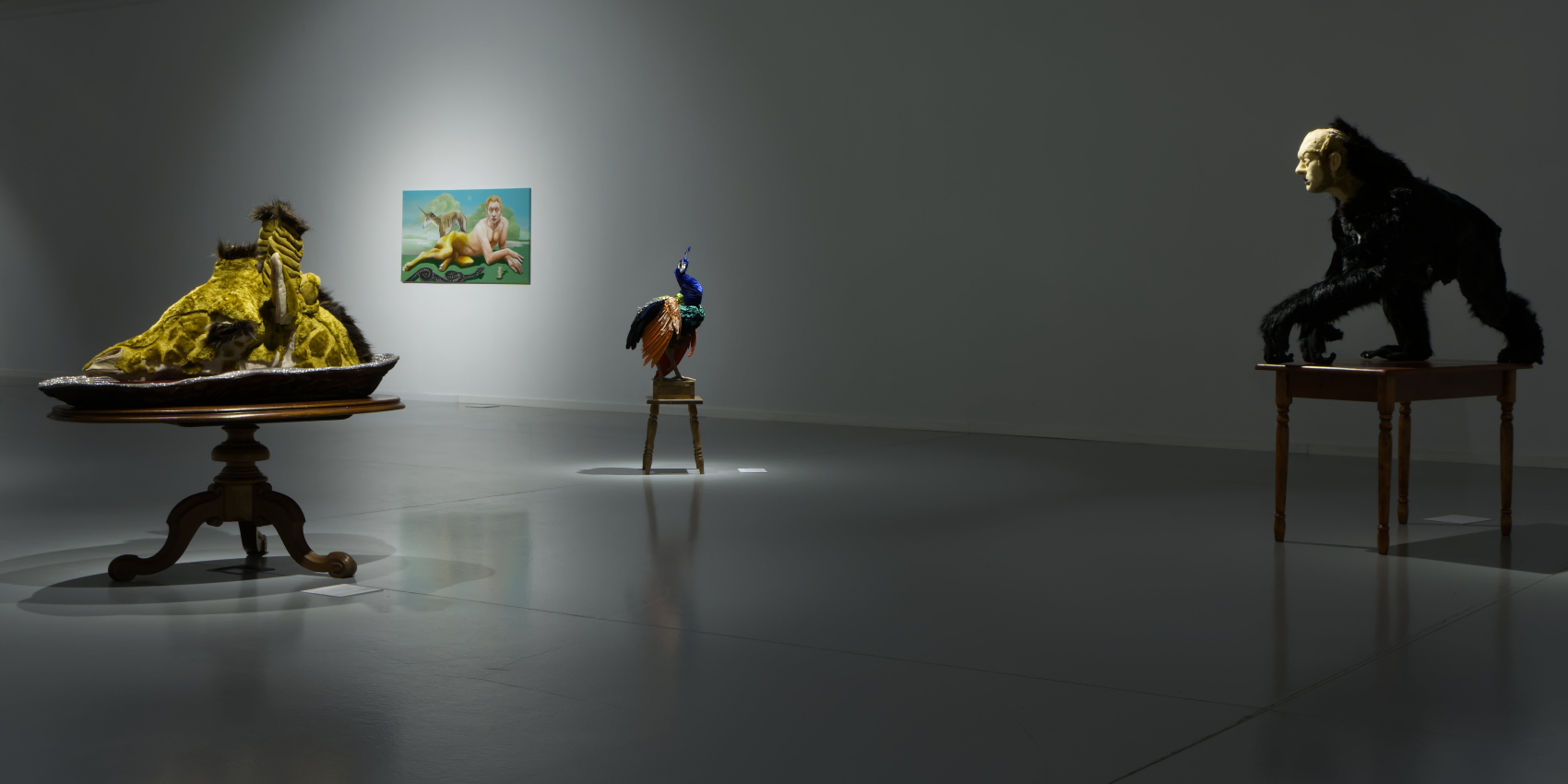
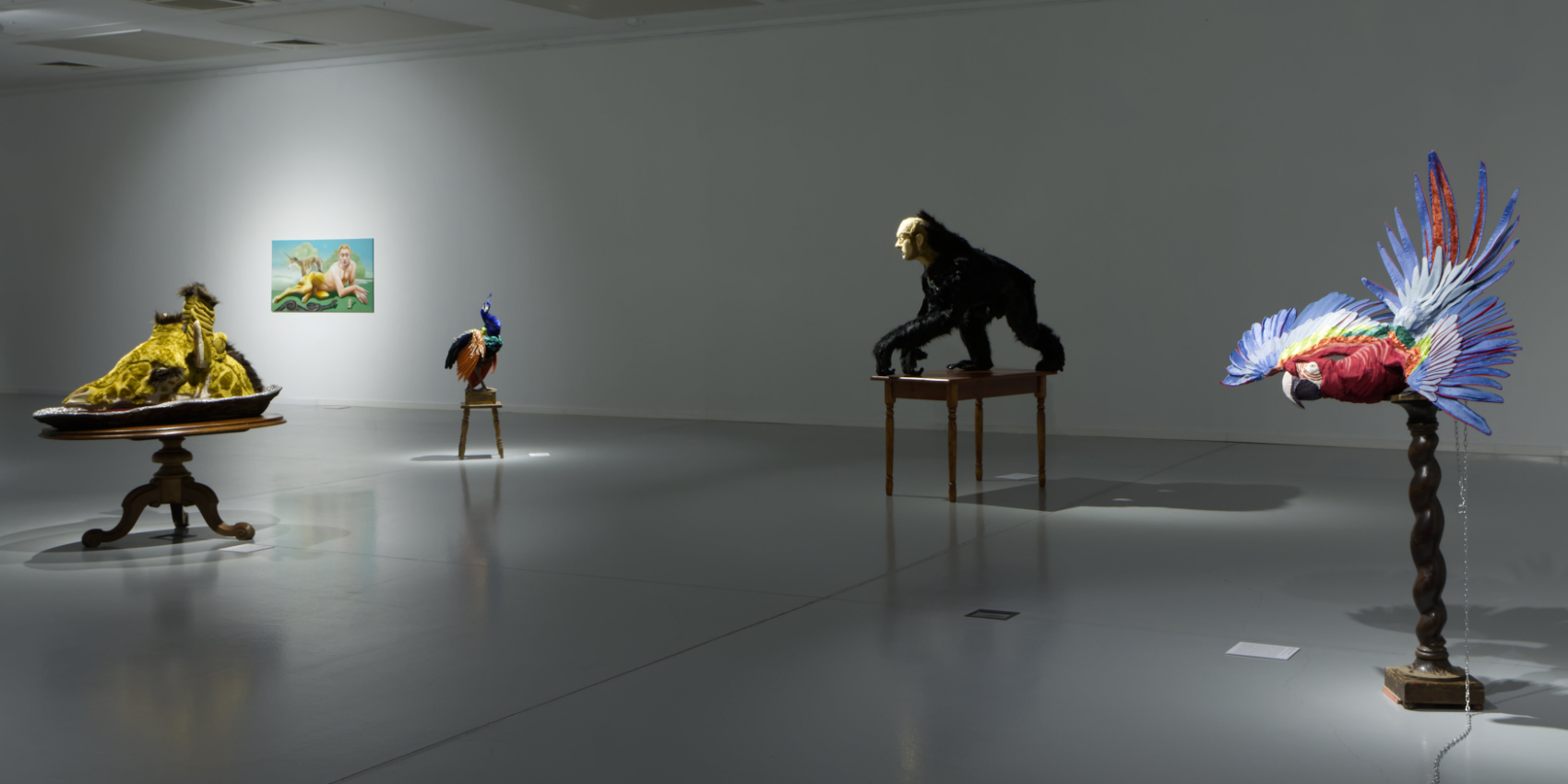
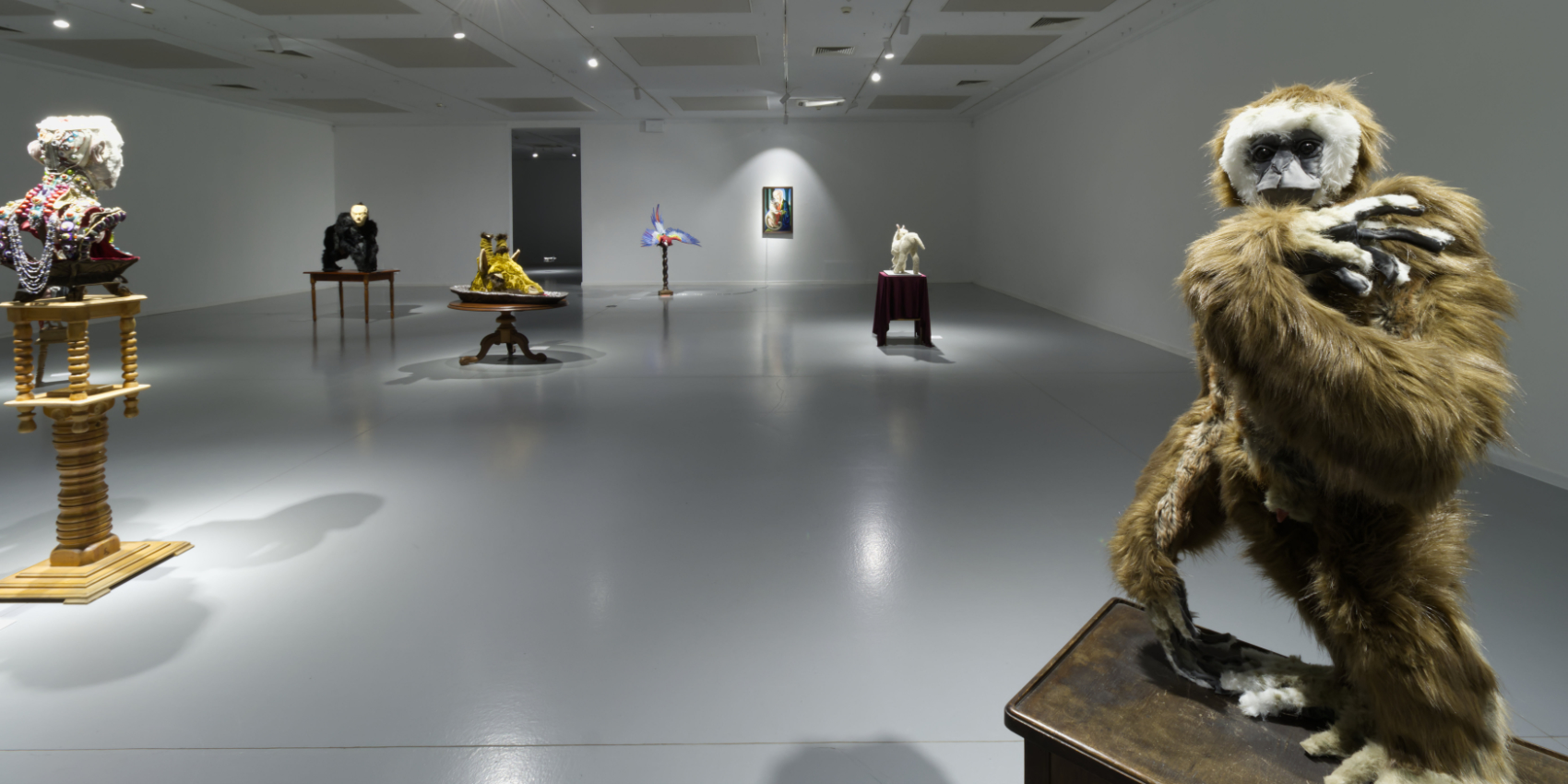
When I look at Mikołaj Thiel’s work, I perceive it first and foremost as a process from which an eclectic identity emerges. The visual structure is composed of references to familiar motifs, sacral connotations, bestiaries, mythology and fairy tales. This system is a research narrative, comprising notes and sketches on identity. It has the characteristics of a patchwork – pieced together from fragments, whilst posing the recurring question: ‘Who am I? Who are you?’ This is not a finished process. It branches out into various fields and genres, taking on many different forms. The nature of the creatures created by Mikołaj Thiel, their hybrid nature, or their placement in an ambiguous context (the monkey in the painting, the bird mummies) defies any conventional or simplistic definition of them. And consequently, it defies their devaluation in terms of how they perceive the world, or their right to a full presence in the world, as beings who are, by definition, simpler, deficient and lower in the hierarchy.
They are bizarre, ambiguous characters. They combine the characteristics of the known (identified) and the unknown (which raises questions and doubts). These are inhabitants of the imagination; visual responses to the reluctantly acknowledged realisation that we are human beings – that is to say, animals. Similarities are uncomfortable, and even dangerous. Fairy tales are an effective way of exploring the unique nature of the relationship between humans and animals. The anthropocentric monolith adheres to the conventions of the genre – both in the literary sense (every fairy tale has a brutal edge) and in terms of the seamless division of the world based on the body into which one is born. In other words, people create a fairy tale with a moral based on speciesism.
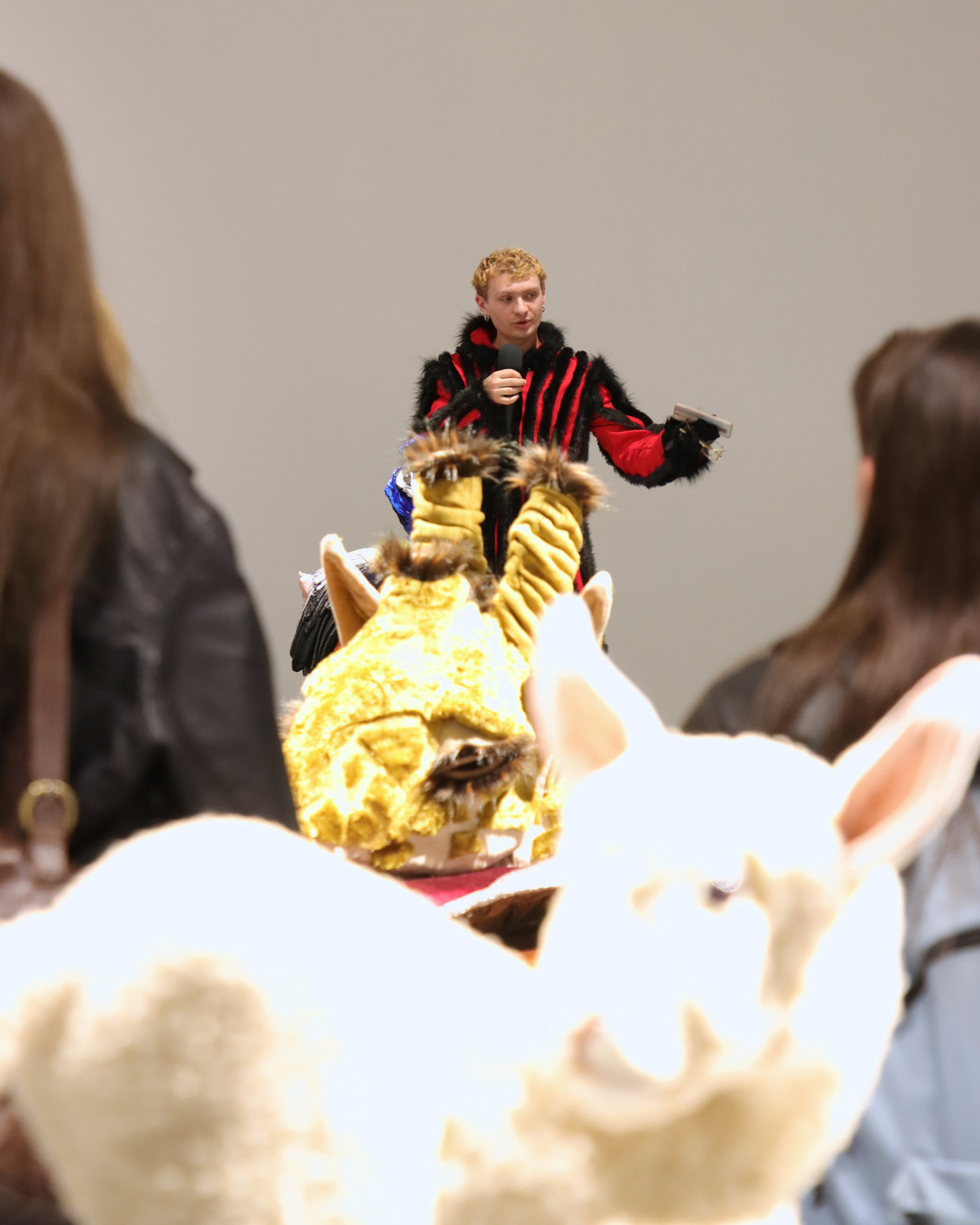
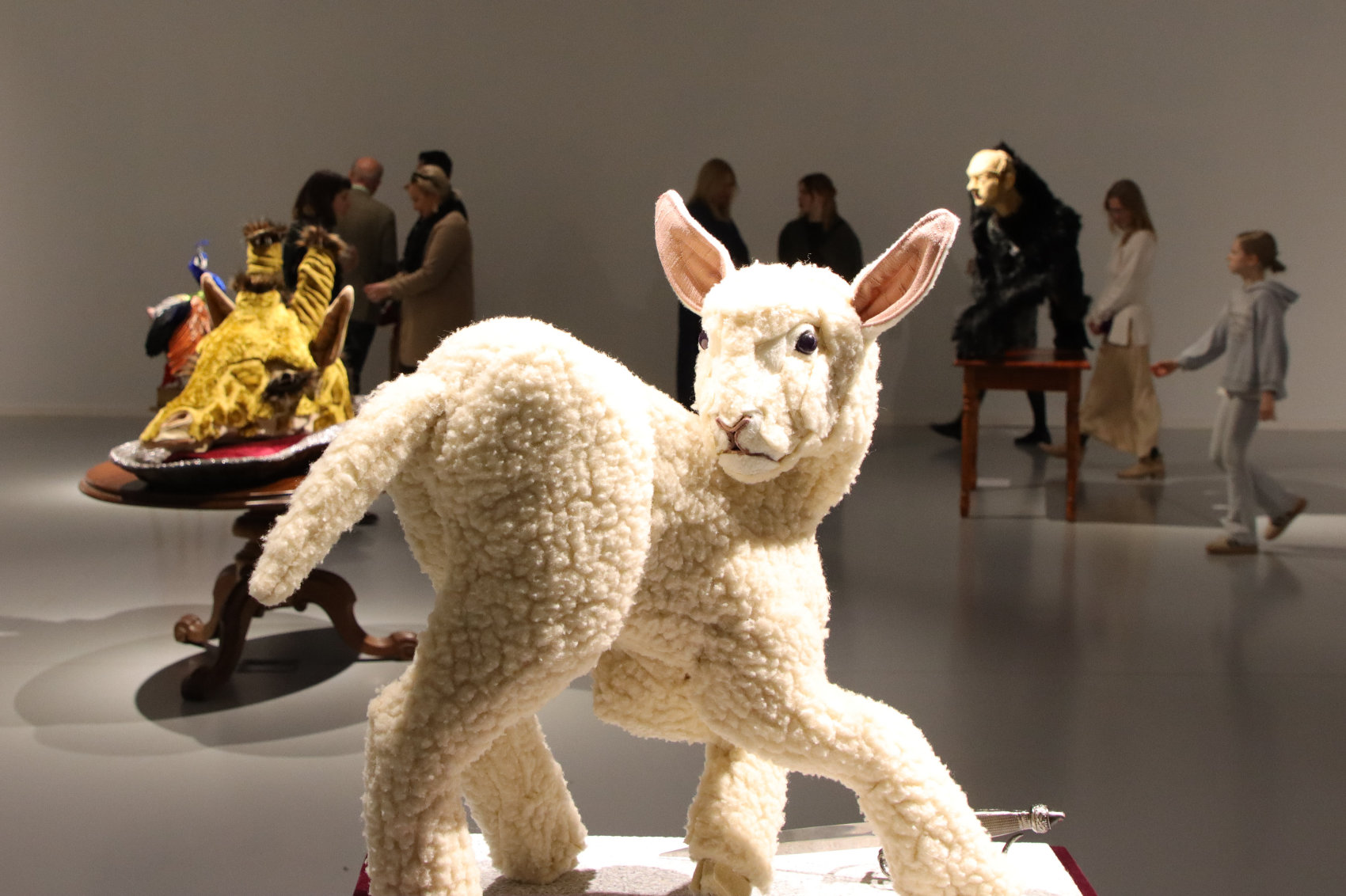
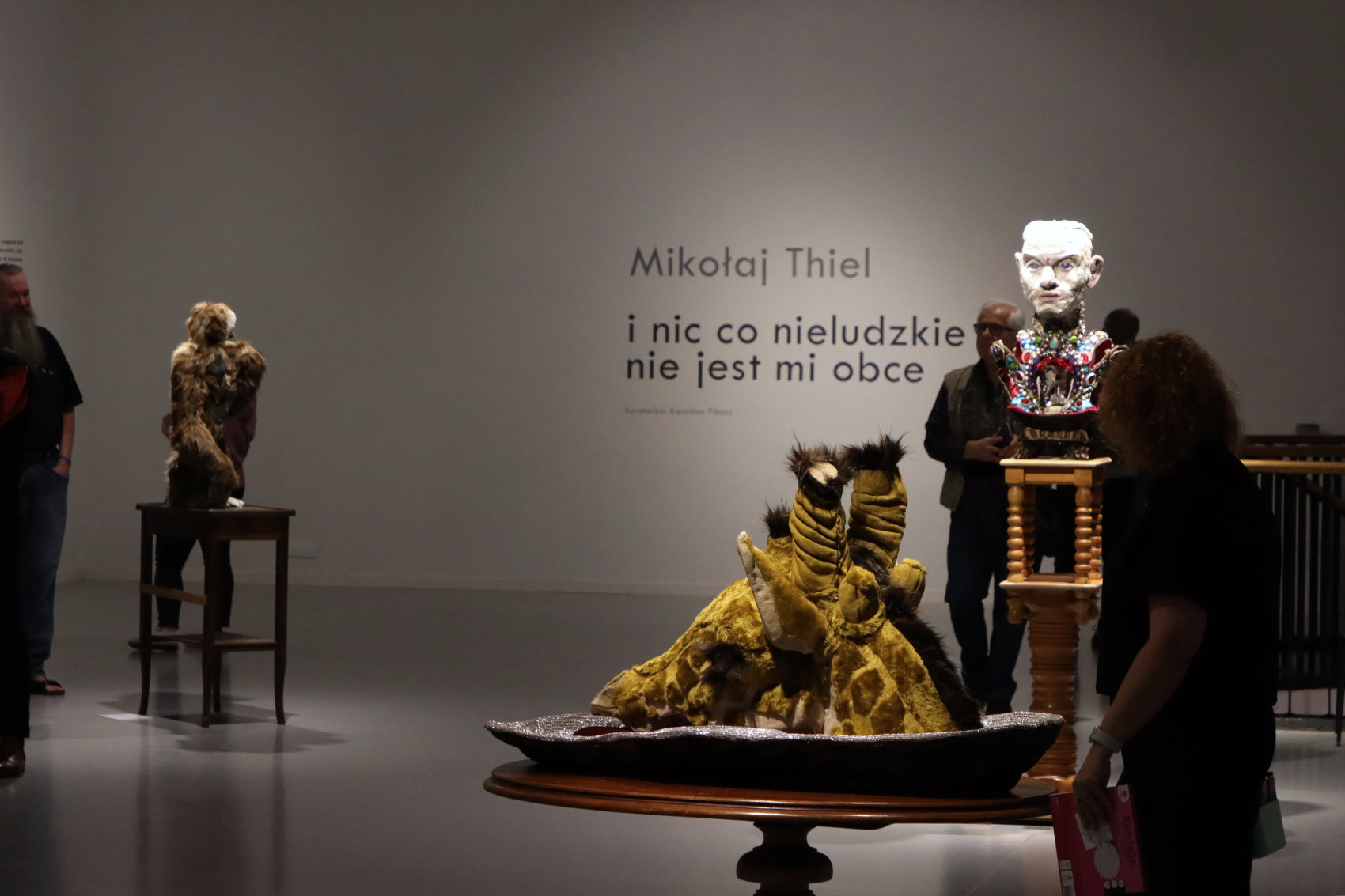
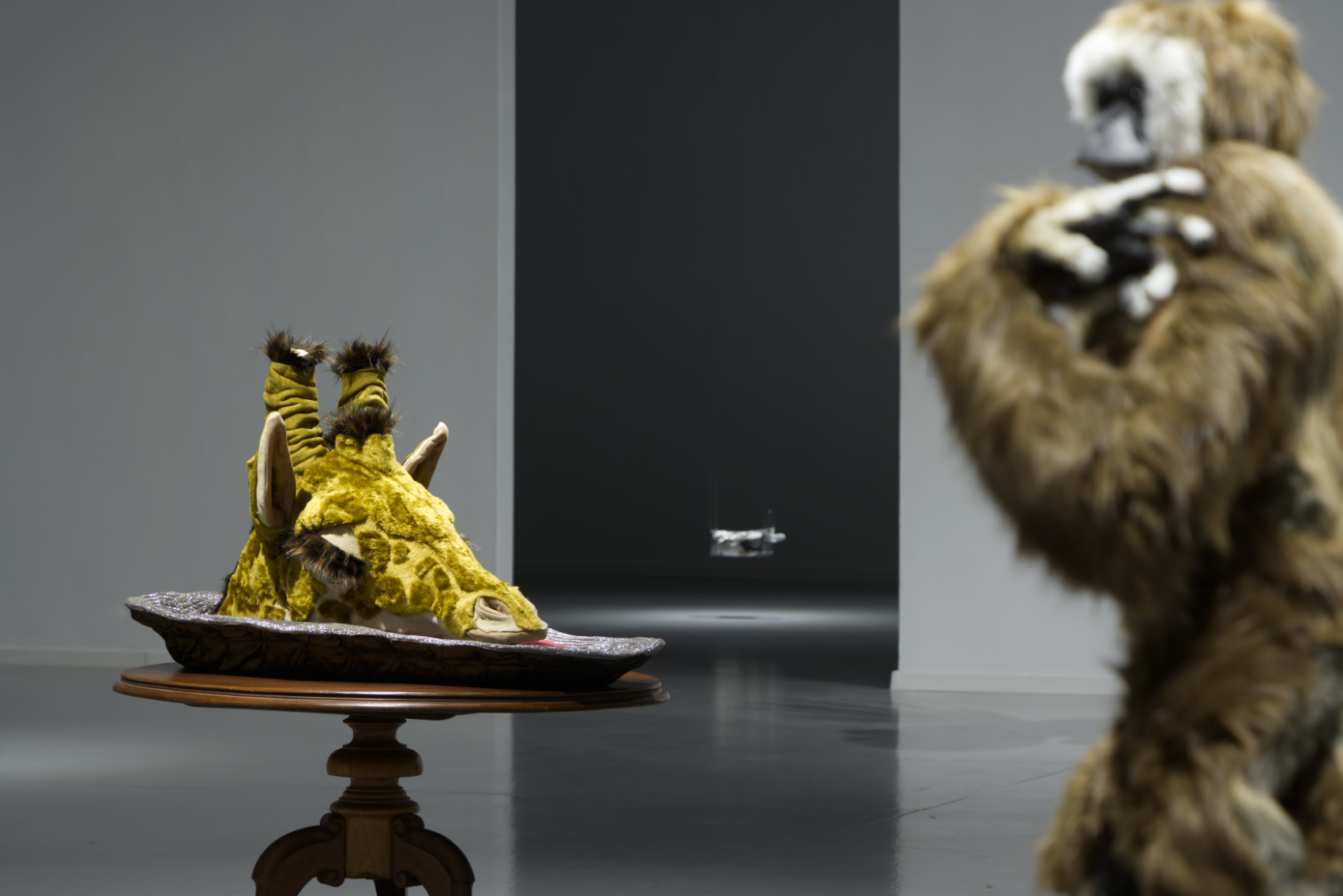
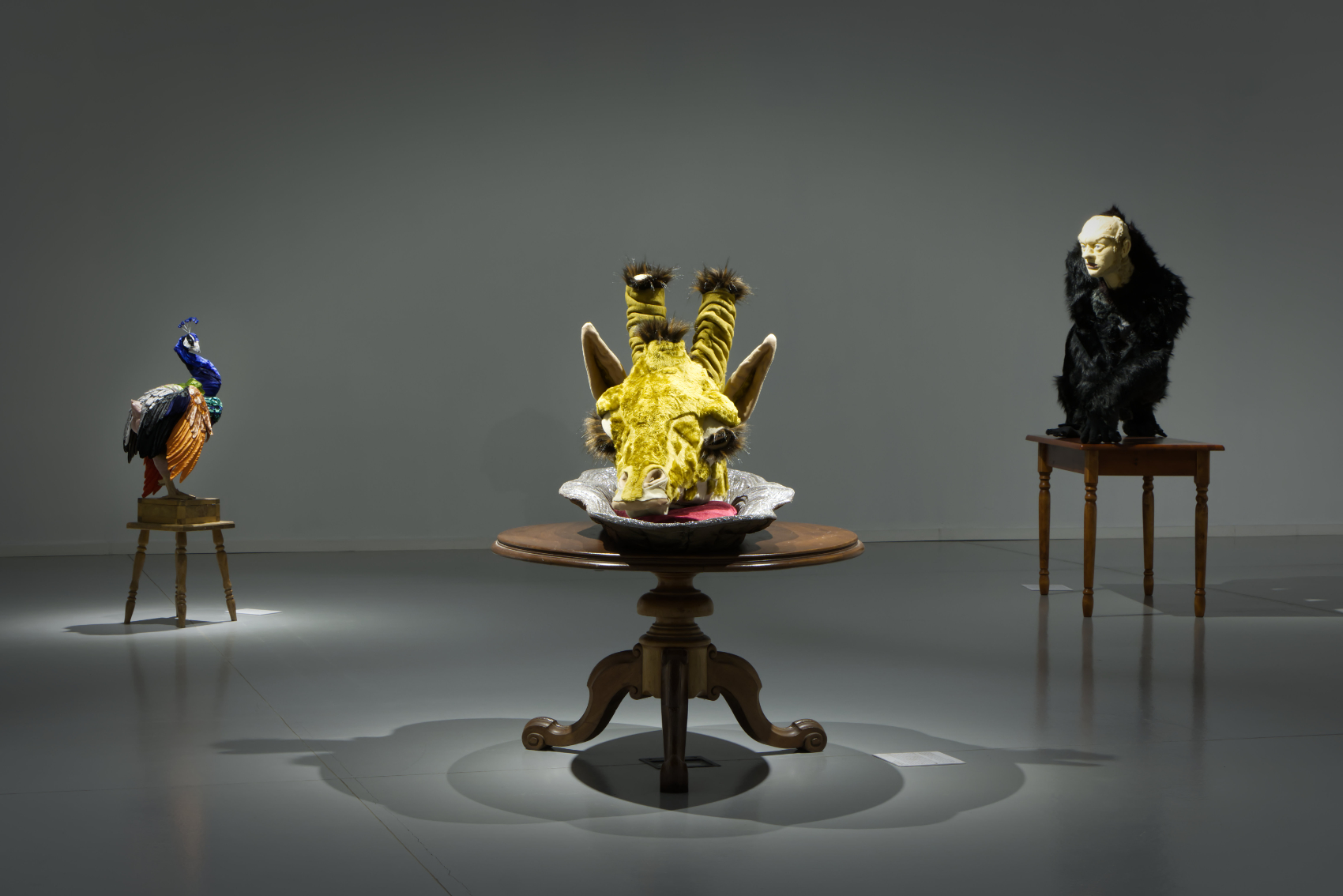
Looking at the beings evoked by Mikołaj Thiel (calling them ‘objects’ seems rather inappropriate), one feels like drifting off into the realm of fantasy. But how, when they bring up uncomfortable thoughts and force us into a confrontation? With our own beliefs, with literalism, with ingrained patterns. With the raw realism of a soggy tray displaying a piece of someone’s body on a shop shelf, or the carcass of a pigeon lying by the kerb. Every day it’s the same, and there’s always something extra. A few per cent of wool yarn. New transgressions, indifference, atrocities. New sacrifices, laid out on a platter like a giraffe’s head.
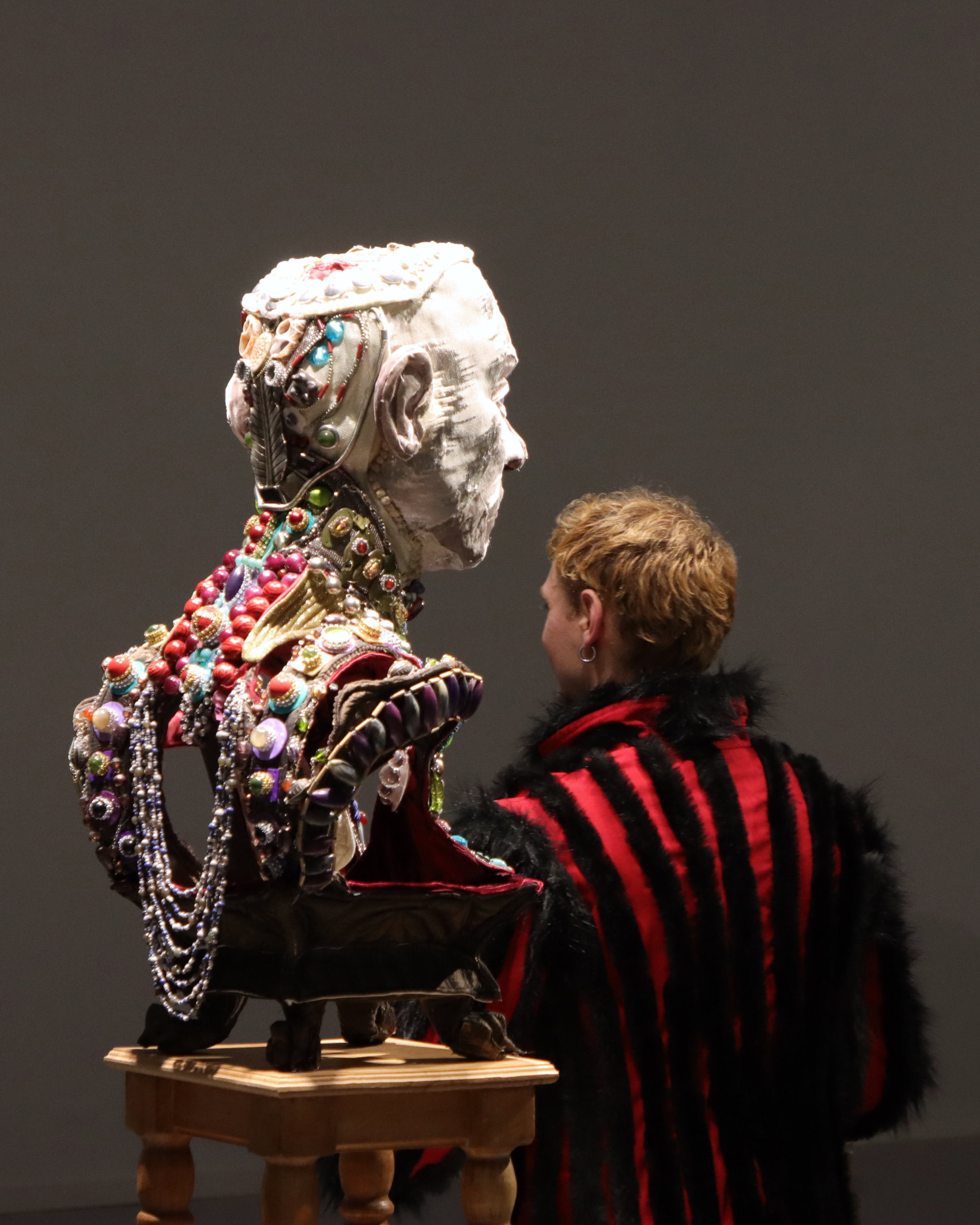
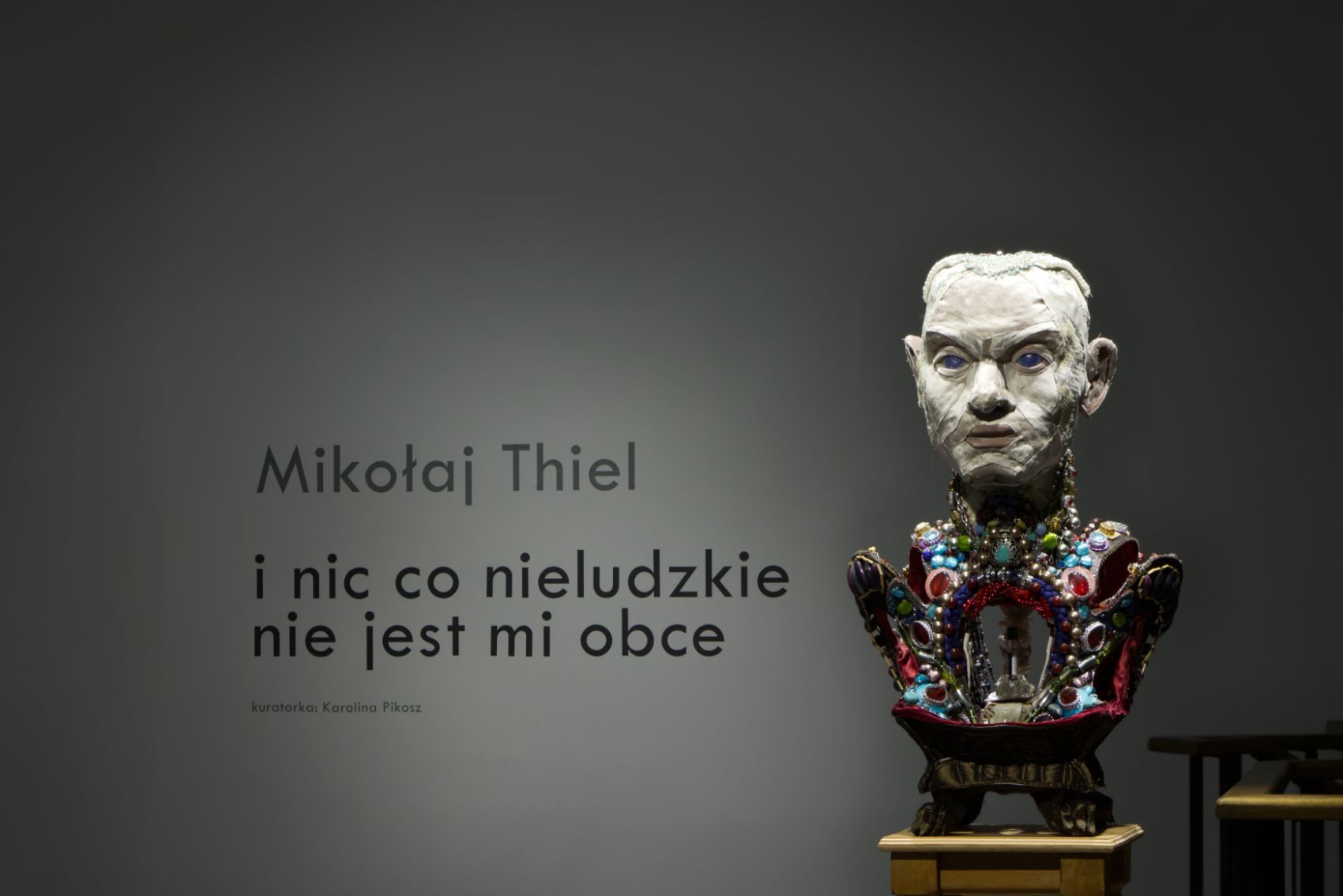
These creatures are bursting with colour and texture, and have a certain glamour about them. Their revue-style nature makes them the perfect vehicle for highlighting cruelty. Seeing those colours and that sparkle is like saying: look how colourful and theatrical the costume is that you sew for your conscience every day. A whirlwind of time constraints, ingrained habits and selfishness, crowned with a wreath woven from the openwork of cynical words: ‘Everyone has the right to choose’. It’s the carnival we know from our own everyday lives. Ordinary and unnoticed. These categories crop up almost every time the subject of animals and their suffering comes up.
We are all residents of the villa, behind whose fence a nightmare is unfolding. Sometimes fragments drift into our garden – sounds, vapours, strange soot. It doesn’t have to get in the way of your work, family life, leisure time or pursuing your passions. Just don’t look over the fence too closely. If I accept that others feel the same way I do – that they want to live and have their own dreams – how can I accept the fact that they are also the ones who are being thoroughly exploited?
It is just as important to look for ‘I’ – connections as it is to look for ‘I’ – contradictions. It seems that a basic sense of self-awareness is essential for establishing a meaningful relationship with others. So, building a bond with oneself. Defining one’s own identity, in order to then define it in relation to others. Awe and guilt – these feelings constantly intertwine when I look at you, when I live with you.
I see Mikołaj’s project as a call to pay attention to oneself – to explore one’s own layers and connections through the use of archetypes, topoi and hybrid figures. A hybrid approach is a risky method. Personification can be tainted by speciesism, turning an animal into a figure – a metaphor. A hybrid is valuable when it helps to overcome genre-related limitations. Without a utopian vision of insurmountable barriers. The ambiguity of one’s own identity allows for a sense of kinship with both the oppressor (the human race) and the victim (non-human animals).
In seeking to explore the scope of what is called identity, the singular ‘I’ gives way to the plural ‘I’. An introduction to identity is the fluidity of the definition of the self, and the dynamics between I and YOU. It’s curiosity and courage. It is a responsibility that boils down to specific relationships. It’s a monkey – David, a canine-like creature with human traits.
Curiosity, understood as the imperative to seek and discover. Recognising that the desire to be oneself applies equally to other animals. This, too, is what makes individual existence so extraordinary and elusive. Not derived from human arrogance, but inherent, unique and singular to each Person. Identity is visibility. It defines individual needs, species-specific needs, and the right to fulfil them. It is both fundamental and impossible to achieve in a world dominated by the needs of a single species.
Courage is confronting the extent of cruelty that always comes to light when we consciously and empathetically examine the relationships between humans and other beings. One can look for euphemisms, hint at a hierarchy, or set political correctness aside. A recurring conclusion which, precisely because it is a recurring one, warrants a different approach each time – this is the cruelty that defines the relationship between humans and animals.
Who are you, when I use you, exploit you, devour you? Who are you, since I am taking your life? Am I taking away your identity by imposing my own vision and my own needs on you? So that you might serve me, even though it is me who doesn’t know who I am or what I really need. My needs are defined by cultural and religious norms, and by a regular and consistent external structure that bears no relation to inner insight.
And nothing that is inhuman is alien to me, for I feel a connection and kinship with animals, as well as a shared family tree across species. My text is a blend of metaphor, literalism and forcefulness. It is a blunt and powerful statement, and it also stems from my own personal experience. A subject that has been explored time and again and continues to demand new forms of expression. It combines all these qualities, just as Mikołaj’s work does.
I look into her eyes; I see her moving with perfect grace, fully present – for she knows, she is wholly devoted to being, to existence. Set in the real world, brilliantly canine. An animal is the fulfilment of identity. Understood as an individual, an entity, an animal needs no overly intellectualised, analytical trappings to know how to fulfil itself. How to exist in the world.
Karolina Pikosz
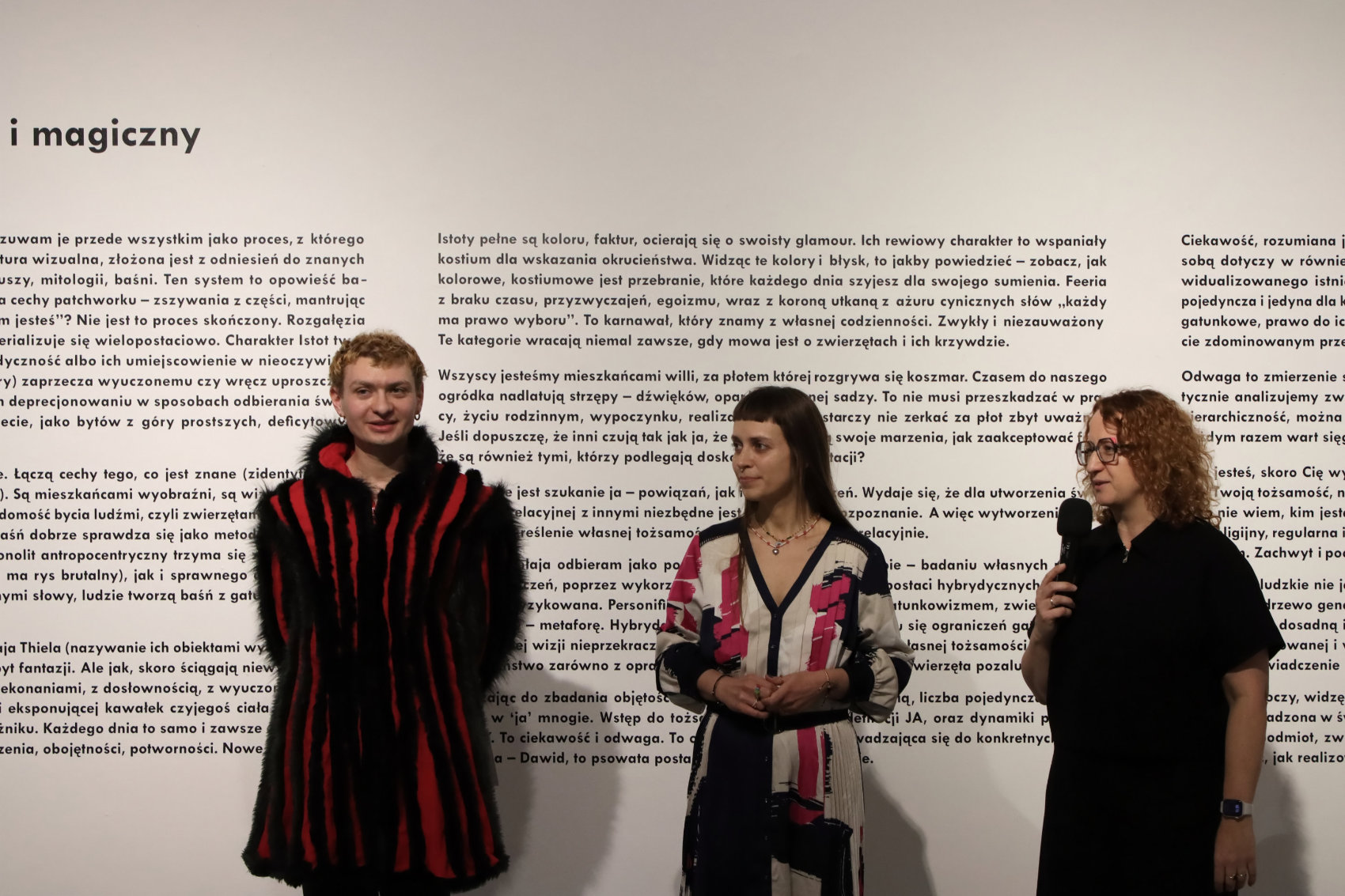
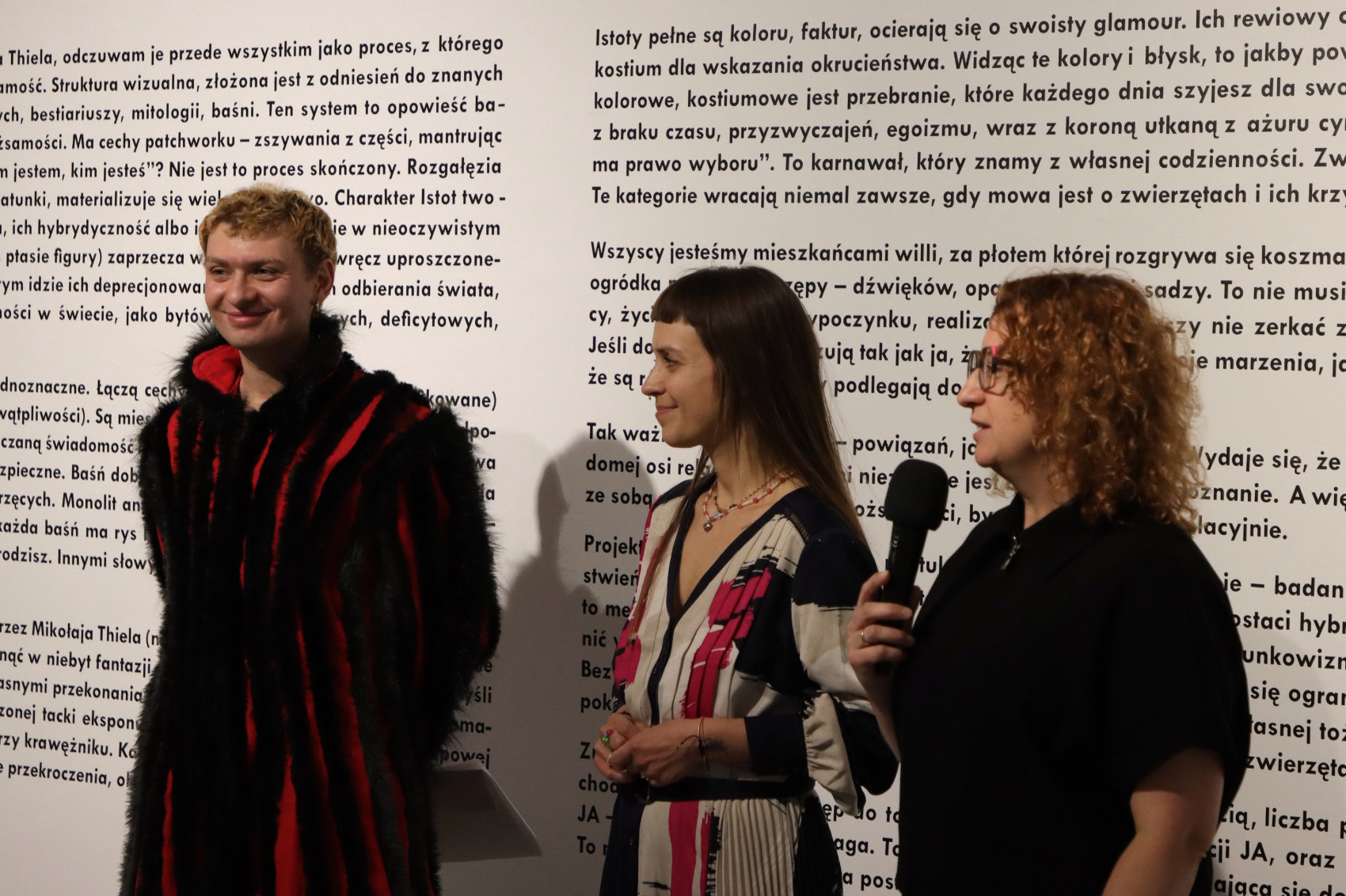
Mikołaj Thiel – interdisciplinary artist. He paints, creates three-dimensional objects, clothing designs and costumes. He uses textiles in his work, most of which are second-hand. An important aspect of his artistic practice is working with his own image. In his work, he explores themes such as queer identity, the relationship between humans and non-human beings, evolution, and fantastical zoology. Lives and works in Poznań.
curator of the exhibition: Karolina Pikosz
Beginning: 10.03.2026, 6pm 20 Gdańska St.
End 17.05.2026