
We would like to invite you to another lecture of the Bydgoszcz Academy of Art.
Agata Szydłowska – An armchair for Grandad, a sofa bed for Mum and Dad. On living space for household members in a flat during the Polish People’s Republic
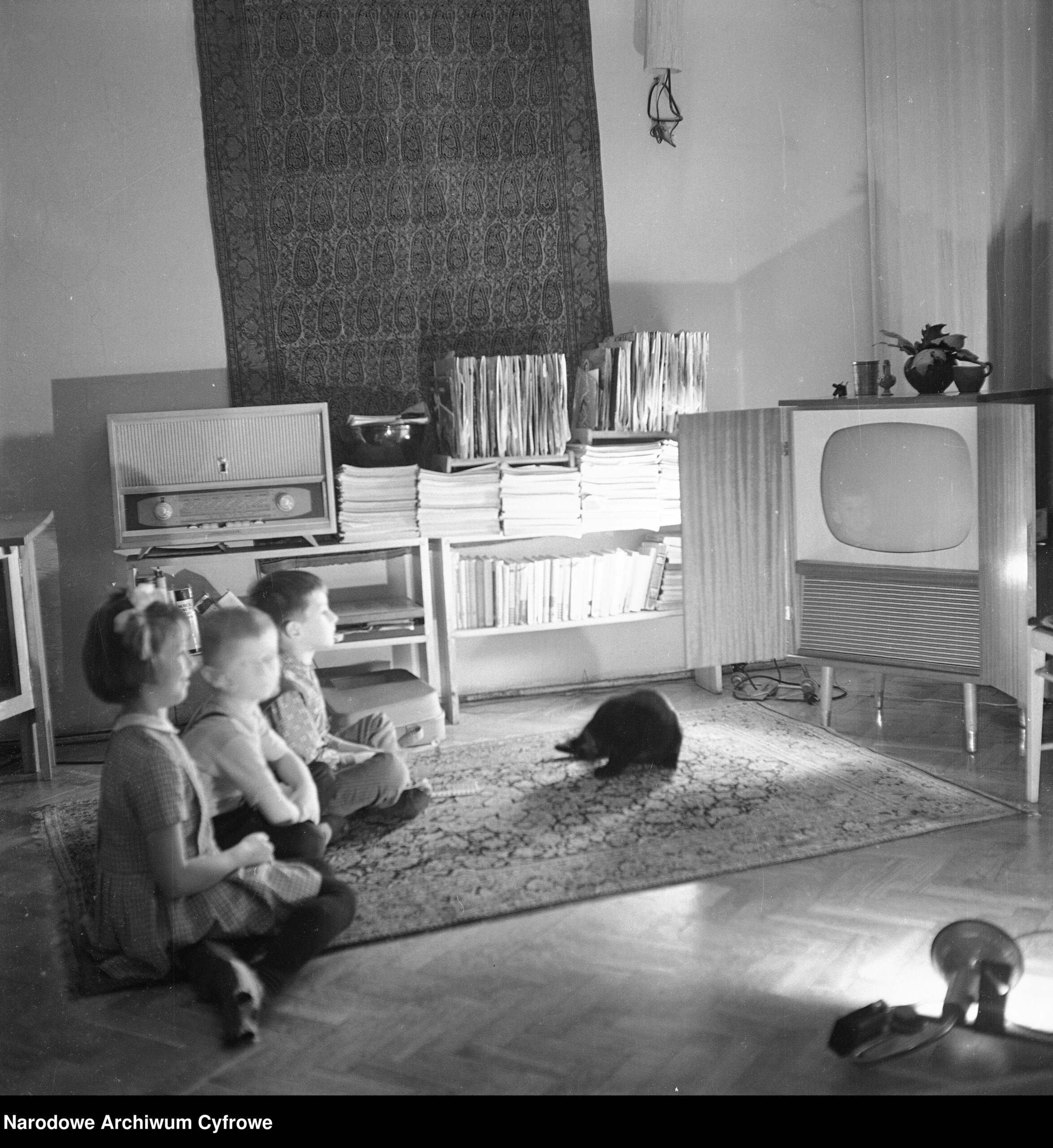
The optimal living space per person is reportedly 25–35 square metres. Ideally, every member of the household should have their own room, or at least a corner to themselves. Under Polish law, a flat is considered overcrowded if it does not have one shared room, one room for a couple, one room for each adult, one room for two teenagers of the same sex or two separate rooms – one for a girl and one for a boy – and one room for every two children under the age of 12. To this day, Polish men and women live in overcrowded flats, and in the post-war decades, the comfort of having one’s own space was almost unattainable. In a feature article from the late 1970s, Hanna Krall wrote about her mother, a teacher, who would mark pupils’ exercise books at night in the bathroom, and her grandmother, who would only get up once the rest of the family had left for their daily activities – before that, there was no room for her. In the People’s Republic of Poland, master bedrooms were a rarity, and children often played in the hall or the kitchen. During the lecture, we will examine how space was planned for individual family members in larger, smaller and tiny Polish post-war flats. We will see what our dreams looked like (teenage furniture sets) and what reality was like (sleeping in shifts or a bed for Grandma in the kitchen). We will also discuss how people’s background and education influenced the way space was allocated to individual members of the household.
Agata Szydłowska – researcher, author, curator. She graduated in art history from the University of Warsaw and the School of Social Sciences at the Institute of Philosophy and Sociology of the Polish Academy of Sciences, and holds a PhD in ethnology. She works in the Department of Design Theory at the Faculty of Design, Academy of Fine Arts in Warsaw, where he teaches, amongst other things, the history of design. She is interested in interdisciplinary research into design, particularly the intersections between design, politics and social life. Author and co-author of books on typography, Polish graphic design and magazines from the People’s Republic of Poland, including Futerał. O urządzaniu mieszkań w PRL-u, (Case. On interior design in the People’s Republic of Poland) for which she received the KLIO Award and was nominated for the Marcin Król Award and the Polityka History Award, Paryż domowym sposobem (Paris, the home-made way), and Od solidarycy do TypoPolo (From solidaryca to TypoPolo), as well as academic and popular science articles. She is also a co-founder of the long-running Zoepolis project, which explores interspecies communities and encompasses exhibitions, artistic research and a book.
17.06.2026, 18.00
20 Gdańska St.